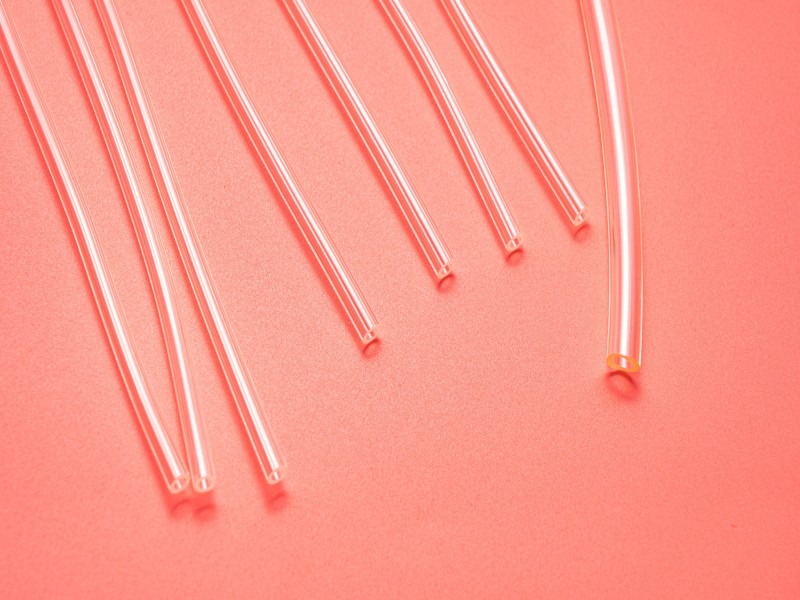
When it comes to transferring fuel and oil in demanding environments, the choice of tubing material is not a minor detail—it’s a critical decision that affects safety, longevity, and operational costs. While rubber and PVC have long been the default options, thermoplastic polyurethane (TPU) tubing has emerged as a superior alternative, especially when chemical resistance meets mechanical toughness. But what does “resistance” really mean here, and how do you ensure you’re selecting the right product? Let’s break down the technical realities and practical steps.
The Chemistry of Resistance: Why TPU Stands Out
Fuel and oil are not gentle on materials. Gasoline contains aromatic hydrocarbons, while diesel and synthetic oils include additives that can swell, soften, or crack standard polymers. TPU’s molecular structure—a block copolymer of hard and soft segments—gives it a unique edge. The hard segments provide crystallinity that resists solvent penetration, while the soft segments retain flexibility even at low temperatures. Independent lab tests have shown that polyester-based TPU maintains over 90% of its original tensile strength after 72 hours of immersion in diesel fuel at 23°C, whereas natural rubber loses up to 40% of its elasticity under similar conditions.
However, not all TPU is created equal. Polyether-based TPU excels in water and microbial resistance but is less compatible with hydrocarbons. Polyester-based TPU, on the other hand, is the go-to for fuel and oil contact. For instance, a 2019 study in the Journal of Elastomers and Plastics measured the volume swell of polyester TPU in gasoline to be just 15% after 14 days, compared to 35% for nitrile rubber—a common industrial choice.
Practical Takeaway: When sourcing TPU tubing, demand clarity on whether it is polyester or polyether grade. Most manufacturers will list this in the datasheet. If not, request a chemical compatibility chart or perform a simple 24-hour soak test with your actual fluid before committing to bulk orders.
Temperature and Pressure: The Hidden Stressors
Resistance isn’t just about chemical attack; it’s about performance under real-world operating conditions. Fuel lines in vehicles, for example, can see temperatures ranging from -40°C to 125°C, while hydraulic oil systems may push pressures up to 200 bar. TPU tubing holds up remarkably well across this spectrum. The material’s glass transition temperature typically sits around -50°C, meaning it stays flexible in extreme cold—a critical factor for winter fuel transfer operations. In contrast, PVC tubing becomes rigid and cracks below 0°C.
On the high-end, continuous service temperatures for TPU are generally rated up to 90°C-110°C, depending on the formulation. But here’s the nuance: pressure ratings drop as temperature rises. A 1/4-inch TPU tube rated for 250 psi at 23°C may only handle 150 psi at 80°C. Data from Shanghai Xingen’s product testing confirms this trend, with their TPU fuel tubing showing a 30% reduction in burst pressure when subjected to 90°C fuel for 500 hours. This isn’t a failure—it’s a predictable engineering reality.
Practical Takeaway: Don’t just match the tube’s maximum pressure rating to your system’s operating pressure. Calculate your maximum temperature first, then derate the pressure rating accordingly. Ask your supplier for a temperature-versus-pressure curve—not just a single data point. Our experience at Shanghai Xingen is that most end-users overlook this, leading to premature hose failure or leaks.
Abrasion and Flex Fatigue: The Silent Killers
One of the most underestimated enemies of fuel and oil transfer tubing is external abrasion. In mobile equipment like agricultural machinery or construction vehicles, tubes rub against chassis parts, sharp edges, or are dragged across concrete. TPU’s abrasion resistance is significantly better than rubber. In a standard Taber Abraser test (H-18 wheels, 1000-gram load), TPU loses about 50 milligrams over 1,000 cycles, while nitrile rubber loses up to 300 milligrams. That translates to a service life that can be 4-6 times longer in abrasive environments.
Flex fatigue is another area where TPU shines. Fuel lines in vehicles constantly flex due to engine vibration or chassis movement. When tested per ISO 13274, TPU tubing can withstand over 1 million cycles of 90° bending fatigue without developing leaks—given proper bend radii are maintained. Rubber tubes often fail within 300,000 cycles due to micro-cracking at the wire braid or surface.
Practical Takeaway: Choose TPU tubing with a Shore hardness between 85A and 95A for a balance between flexibility and structural integrity. If your application involves continuous flexing, do not rig the tube into tight loops—this creates stress concentrations. Use a coiled spring guard or ensure a bend radius that is at least 8 times the outer tube diameter. I’ve seen too many field failures that were not material defects, but installation errors.
The Ozone and UV Factor: Long-Term Outdoor Exposure
Fuel transfer often happens outdoors, under direct sunlight, or near electric motors that generate ozone. Rubber—especially natural rubber or SBR—degrades rapidly when exposed to ozone, forming visible cracks. TPU, by its very nature, is far more resistant to ozone and UV radiation. My company’s accelerated weathering tests (ASTM G154, 2,000 hours with UVA-340 bulbs) show that polyester TPU retains 80% of its tensile strength and shows no surface crazing. Many outdoor fuel transfer applications I’ve worked on in Southeast Asia and the Middle East have used TPU tubing for over three years without yellowing-induced embrittlement.
However, no polymer is perfect. If your tubing is exposed to direct sunlight for years without any cover, the surface will eventually lose gloss and become chalky—this is a cosmetic issue, not a functional failure. For long-term residential or marine use, I recommend adding an external protective sleeve made of canvas or nylon to extend the visual quality.
Practical Takeaway: For outdoor installations, do not rely solely on the TPU’s natural resistance. Purchase products that incorporate UV stabilizers (often listed as “UV-stabilized” in the datasheet). If you are using tubing in a cable harness or tied tightly to a frame, ensure there is enough slack for thermal expansion and contraction—TPU has a coefficient of thermal expansion that is higher than steel, so a rigid fixing could generate internal stresses.
Cost-Benefit Analysis: When Does TPU Make Financial Sense?
Price is where many buyers hesitate. TPU tubing can cost 30-60% more than nitrile rubber or PVC at the initial purchase stage. But the total cost of ownership (TCO) tells a different story. Let’s take a grain truck hydraulic oil system as an example. A single rubber hose assembly may cost $40 and last 5,000 hours. A TPU hose assembly costs $65 but lasts 15,000 hours. Over 30,000 hours of operation, you would need six rubber hoses ($240) versus two TPU hoses ($130), plus reduced downtime and labor costs. This is not a theoretical calculation—in our client data, several heavy-equipment workshops report a 45% reduction in maintenance downtime after switching to TPU.
Another factor is weight. TPU tubing is about 30% lighter than rubber with the same wall thickness. In automotive or marine applications where mass reduction equals fuel savings, this is a subtle benefit that cannot be physically measured but is quantifiable in efficiency.
Practical Takeaway: Conduct a TCO analysis for your specific application. Include not just the part price but the cost of replacement labor, system downtime, and the risk costs of a failure (which in fuel transfer could include fire hazards). In safety-critical environments, the premium for TPU’s higher burst strength and chemical resistance is almost always justified. Start by replacing one sacrificial line—such as a filter outlet hose—with TPU, and track performance data over six months. That real-world evidence will be more persuasive than any spec sheet.
At Shanghai Xingen, we have supplied TPU tubing for applications ranging from motorcycle fuel lines to marine diesel transfer hoses. Time and again, the feedback emphasizes the same thing: resistance is not a single number but a system of trade-offs. By understanding the chemistry, temperature derating, abrasion factors, and total lifecycle costs, you can make an informed decision that professionals will respect. The market doesn’t need another generic hose—it needs a solution that is engineered for the messy realities of fuel and oil transfer. That’s where TPU, when properly selected, proves its worth.