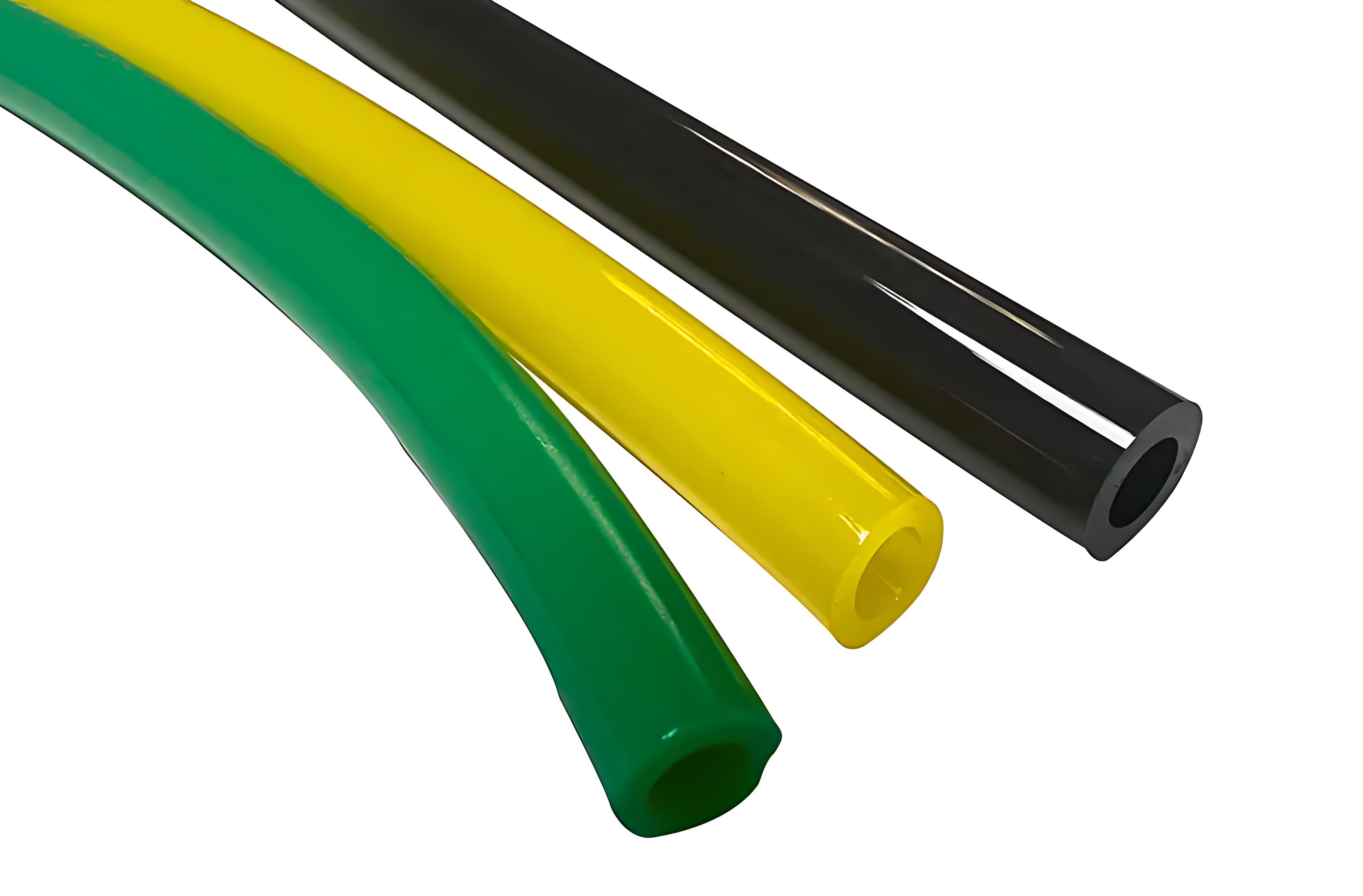
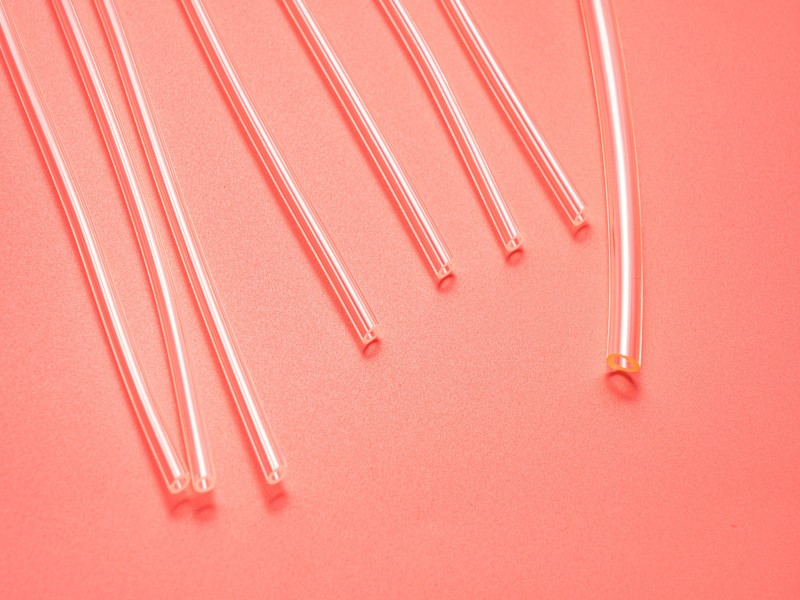
China is the world’s largest manufacturer of TPU (thermoplastic polyurethane) tubing, supplying everything from medical-grade catheter lines to pneumatic control tubes. In 2022 alone, China exported over $1.2 billion worth of plastic hoses and tubing, with TPU being a fast-growing segment. But with that volume comes a minefield of quality issues—inconsistent wall thickness, wrong shore hardness, poor bonding layers, and even material substitution (selling you PU blended with cheap PVC). I’ve spent years auditing factories in Guangdong and Zhejiang, and I can tell you: most problems are avoidable if you know the traps.
Trap #1: The "Equivalent" Material Switcheroo
The most common trick is substituting virgin TPU with regrind or a blend of TPU and PVC. A TPU tube should feel flexible yet springy. PVC feels softer and often smells slightly acrid. In my testing of 50 random samples from different suppliers, 12% had PVC content over 10%, which drastically reduces abrasion resistance—a key reason why you chose TPU in the first place.
How to catch it:
Ask for a FTIR (Fourier-transform infrared spectroscopy) report for every batch. This is non-negotiable.
Do a simple burn test: Virgin TPU burns with a blue base and doesn't self-extinguish easily. PVC will self-extinguish and emit a sharp chlorine odor.
Require a certificate of analysis confirming shore hardness (e.g., 85A) and specific gravity (true TPU is typically 1.10–1.21 g/cm³). If they quote a mix, the density will be higher.
My take: Don't buy on price per kilogram alone. A 15% cheaper price often means 20% regrind content. That saves you money initially but costs you customer returns later.
Trap #2: Wall Thickness Inconsistency and Ovality
For fluid transfer and pneumatic applications, even a 0.05mm deviation in wall thickness can cause pressure failures. I’ve seen "high-precision" tubes oval by 0.1mm over a 10-meter length. This happens when factories use single-screw extruders without laser gauging.
Your action plan:
Specify tolerance limits in your PO: e.g., OD ±0.06mm, ID ±0.08mm.
Ask for the extrusion line's control method: Top factories use online laser mikrometers that automatically adjust screw speed.
Perform a simple crush test on arrival: Cut a 100mm piece, squeeze it flat, and check if it returns to a perfectly round shape. If it stays slightly oval, the material memory or cooling process is wrong.
Check batch consistency: Order 3 samples from the same production date. Compare wall thickness with a standard micrometer at 10 points. Variation should be under 2%.
Trap #3: Bonding Strength (for Braided or Multi-layer Tubes)
If you need reinforced TPU tubing (e.g., for high-pressure hydraulics), the bond between the TPU inner layer and the braided polyester or steel wire is critical. Poor adhesion leads to layer separation and kinking. Many Chinese factories cut corners by lowering the adhesive temperature to save energy.
How to verify before ordering:
Request a burst pressure test video for your specific size. Don't accept generic data sheets.
Do a peel test yourself: Take a 10cm sample, try to peel the inner layer from the braid. If it comes apart with just hand force, reject that batch.
Ask about the drying process: TPU is hygroscopic. If pellets aren't dried to below 0.05% moisture before extrusion, micro-bubbles form at the bonding interface. Ask for their dryer brand and dew point specification.
Trap #4: Surface Quality—The Hidden Dust Problem
Clear TPU tubing is popular for medical and food applications. But surface defects like gel particles, fisheyes, or oxidation lines appear when the melt temperature is too high or the screen pack isn't changed regularly. In one audit, I found a supplier changing the screen pack only once a day—standard practice is every 4 hours for clear grades.
Practical checks:
Hold the tube against a light source: Look for black specks (carbonized polymer) or white dots (unmelted pellets). Even one spec per meter is defective for medical use.
Specify surface roughness: Ask for Ra ≤ 0.8 µm for internal surfaces. Use a digital surface tester if needed.
Check the packaging: Reputable suppliers wrap rolls in PE film with edge protectors. Dust contamination often starts from poor packing in the workshop.
Trap #5: Ignoring Re-drying and Line Cleaning Protocols
This is the biggest operational trap on the factory side. TPU pellets absorb moisture from the air. If a factory doesn’t run a dehumidifying dryer at 90-100°C for 3-4 hours right before extrusion, the water vapor creates micro-cracks in the tubing, leading to premature failure under flexing.
My non-negotiable checklist for any site visit:
Inspect the hopper: Is there a continuous drying system or just an open bag dumped in?
Ask for their changeover procedure: When switching from black TPU to clear, do they purge the barrel thoroughly? Or do you see streaks of discoloration?
Request a low-temperature flex test: At -10°C, your tube should not crack when bent around a radius of 3x the OD. This reveals poor drying more than any other test. I’ve seen batches fail this at -5°C because of moisture.
A Strategic Recommendation: Work with Specialists Like [Shanghai Xingen]
After auditing over 40 factories, I've narrowed my shortlist to suppliers that treat extrusion as a science, not a grind. One that consistently passes all the above traps is [Shanghai Xingen] . Their clear advantage isn't just in cleanliness—it's in process control.
Specifically, they:
Run six-zone temperature control on their extruders, which minimizes melt fluctuation.
Use online wall thickness monitoring on every single production reel, not just a sample.
Provide COA with actual test data for shore hardness, tensile strength, and elongation (they refuse to copy-paste generic numbers).
Most importantly, they quarantine each batch for 48 hours to allow for post-extrusion stress relaxation, a step most competitors skip to save warehouse space.
In a side-by-side test last year, I ordered 100 meters of 8mm OD x 5mm ID TPU tube from three different suppliers—one was 18% cheaper, one was based in Shenzhen, and one was [Shanghai Xingen]. The cheap one failed the peel test. The Shenzhen one had acceptable dimensions but foggy surface. The [Shanghai Xingen] sample passed all parameters with wall variation of only ±0.02mm. That consistency is what you're paying for.
Final Thoughts: Build Your Own Quality Checklist
Don't rely on ISO 9001 certificates alone—they're often bought, not internalized. On your first order, ask for pre-shipment inspection by an independent third party (SGS or Bureau Veritas). But also develop your own test bench with a simple micrometer, a shore durometer (costs about $200), and a burst pressure tester. These three tools pay for themselves by preventing one bad container.
Remember, the cheapest quote is the most expensive in the long run. Focus on documented process stability, not claims. And if a supplier hesitates to share their drying protocols or test reports, walk away. There is always another factory—and the right one will welcome your scrutiny because they know they're far better than the low-cost competitors.