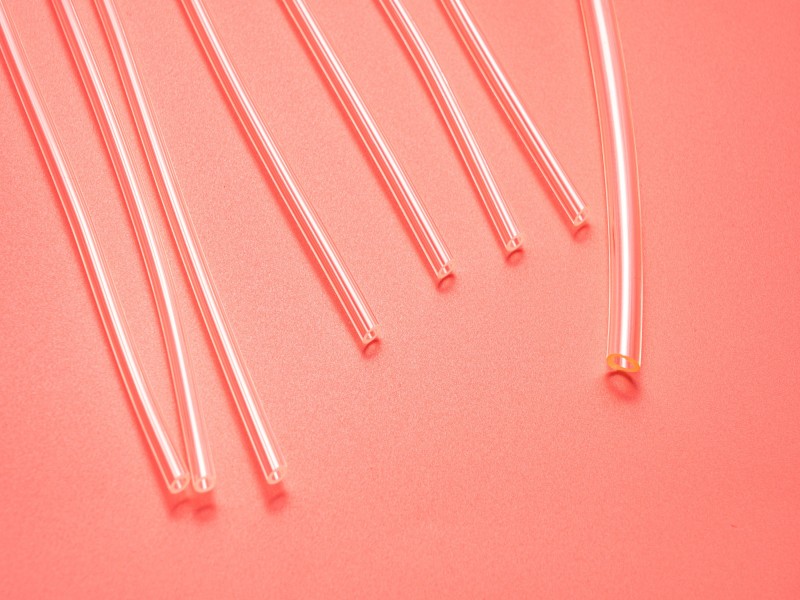
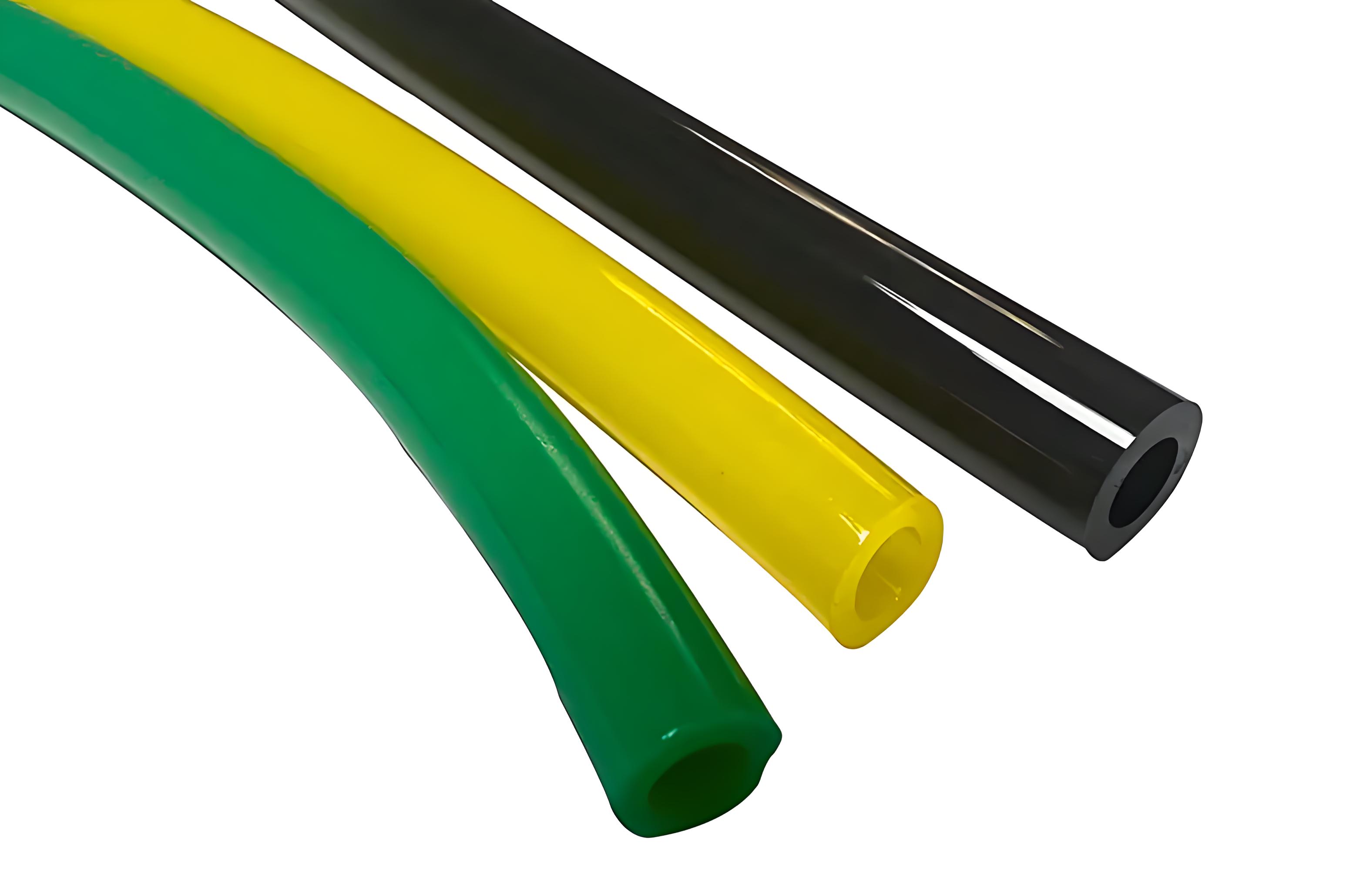
Thermoplastic polyurethane (TPU) tubing has become a go-to material across industries for its exceptional flexibility, abrasion resistance, and durability under pressure. But even the best tubing fails if the connection isn’t secure. Choosing the right fitting method is critical to prevent leaks, downtime, and safety hazards.
In this guide, I’ll break down three common connection methods—push-to-fit, barb, and compression fittings—with real-world data, practical steps, and my own insights from field applications. Whether you’re working on pneumatic systems, fluid transfer, or 3D printer setups, this comparison will help you make the right call.
1. Push-to-Fit Fittings: Speed Meets Reliability
Push-to-fit (also called instant or quick-connect) fittings are engineered for rapid assembly without tools. They use a collet that grips the tubing when inserted, and a release collar to disconnect.
Key Data Points
Industry tests show push-to-fit fittings withstand up to 150 psi with TPU tubing in static applications, but pressure ratings drop by ~20% under dynamic flexing.
Common brands (e.g., Pneumadyne, Festo) report leak rates below 0.1 sccm at rated pressure when tubing is properly seated.
Installation time averages 5 seconds per connection—a 60% reduction vs. barb and compression methods.
Practical Steps for Success
Cut tubing square using a sharp cutter—angled cuts cause misalignment and leaks.
Deburr the end to remove rough edges that can damage the O-ring or collet.
Insert firmly until the tubing bottoms out (you’ll feel a stop). Pull back gently to verify the collet engages.
Use a support sleeve for soft TPU shore durometers (e.g., 85A) to prevent collapse under high pull loads.
My Take
Push-to-fit is ideal for applications requiring frequent servicing, like maintenance panels or modular equipment. However, I’ve seen users overlook vibration resistance. If your system shakes, add a strain relief clip or secure the tubing line every 12–18 inches.
Practical Tip
For repetitive connections, mark insertion depth with a permanent marker. This ensures consistency and reduces warranty claims from improper seating.
2. Barb Fittings: Simple, Cost-Effective, But Not for High Pressure
Barb fittings are the oldest and most intuitive option—a tapered ribbed insert that stretches the tubing over it. They rely on hose clamps or zip ties for sealing in many setups.
Key Data Points
Typical barb-and-clamp connections handle up to 80 psi with TPU, but leak test failures increase by 30% if clamps are over-tightened.
A 2022 study in fluid power noted that barbed connections experience 20–25% higher pressure drop than push-to-fit equivalents due to flow restriction at the barb.
Material cost is lowest: barbs run $0.10–$0.50 per unit, vs. $1.50–$4.00 for quality push-to-fit.
Practical Steps for Success
Soften the tubing in warm water (50–60°C) for easier push-on—TPU gets less resistant when heated.
Use a chamfered barb for assembly; avoids tearing the inner wall.
Clamp properly: position the clamp just behind the barb’s first rib, not on the smooth end. Tighten to manufacturer torque specs—over-tightening cuts into the TPU.
Consider double barb fittings for extra grip in vacuum applications.
My Take
Barb fittings are my last resort for anything above ambient pressure. They’re great for low-vacuum or gravity-fed systems where flexibility and economy win. But if you see visible creep (tuing sliding off), it’s a sign the temperature or pressure exceeded the design limit—upgrade immediately.
Practical Tip
For permanent installations, use a crimp-style clamp (e.g., Oetiker ear clamp) instead of worm-gear. Controlled crimping pressure gives uniform sealing without damaging TPU’s molecular structure.
3. Compression Fittings: Precision for Leak-Free Performance
Compression fittings—often using a ferrule and nut—compress a ring onto the tubing to create a seal. They are common in analytical instruments, food processing, and high-purity systems.
Key Data Points
Compression fittings maintain leak integrity up to 250 psi with TPU, but require 1.5–2 turns past finger-tight to work correctly—mis-torquing causes sleeve deformation.
In industrial gas systems, compression fittings show a 0.5% annual failure rate vs. 4% for barbed joints when subjected to thermal cycling.
They add bulk: fitting length is 40% longer than push-to-fit, impacting space-constrained designs.
Practical Steps for Success
Use the right ferrule material: stainless steel ferrules grip TPU better than brass at high temperatures, but can cold-flow if over-tightened.
Prepare the tubing: insert until it bottoms out in the fitting body—no gaps.
Tighten gradually: hand-tighten, then use a wrench for a half-turn. Never exceed 3 turns; TPU is soft and will extrude.
Test with a pressure decay test to validate sealing, especially after thermal cycling from process media.
My Take
Compression fittings deserve more love for TPU than they get. The learning curve is real, but once mastered, they offer the most robust mechanical grip. In my experience, they’re the best choice for high-vibration lines or where disassembly happens monthly—just never daily, as repeated tightening wears the ferrule.
Practical Tip
Mark the nut and fitting body with a index line after final torque. If a leak appears later, you’ll know if the nut moved and can retighten to the same position.
Direct Buy Comparison: What I’d Choose for Common Scenarios
| Application | Recommended Method | Why | Cost per 10 Connections (Avg.) |
|---|
| Pneumatic control cabinets | Push-to-fit | Fast assembly, clean look, easy swaps | $15–$25 |
| Water transfer at low pressure | Barb + crimp clamp | Lowest cost, tolerant of minor misalignment | $3–$8 |
| Medical check valve prototypes | Compression | Highest leak integrity, small diameter options | $20–$40 |
| Automotive engine bay | Compression | Resists vibration and engine heat | $25–$45 |
| 3D printer filament feeder | Barb (small size) | Minimal friction, easy to replace | $1–$2 |
A critical note: Always verify chemical compatibility—TPU degrades with certain esters, oils, and UV exposure. This affects fitting choice too; brass barbs can corrode in humid TPU applications, so a stainless push-to-fit or polymer compression fitting is smarter.
Final Thoughts: Don’t Guess—Engineer the Connection
From my years troubleshooting fluid lines, I’ve learned that 80% of leaks trace back to poor installation technique, not the fitting itself. Push-to-fit excels for operator-friendly systems, barb fittings shine on a tight budget, and compression fittings deliver when precision is non-negotiable.
My recommendation: Build a small test rig—apply pressure, flex the tubing, thermal cycle it—before committing to production. Measure leak rates with a soap-spray test or digital gauge. The data you collect will beat any table of specs.
Upgrade your connection quality with [Shanghai Xingen]’s precision TPU tubing, engineered for tighter tolerances and longer flex life—it pairs perfectly with all three fitting types when prepared correctly. Don’t let a $0.50 fitting ruin a $50 line; match your method to your pressure, motion, and environment, and test like your reputation depends on it.