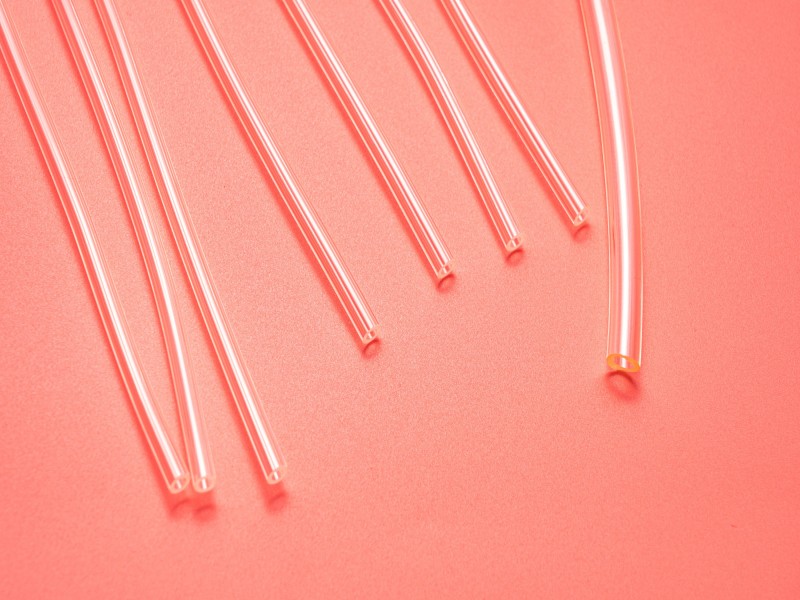
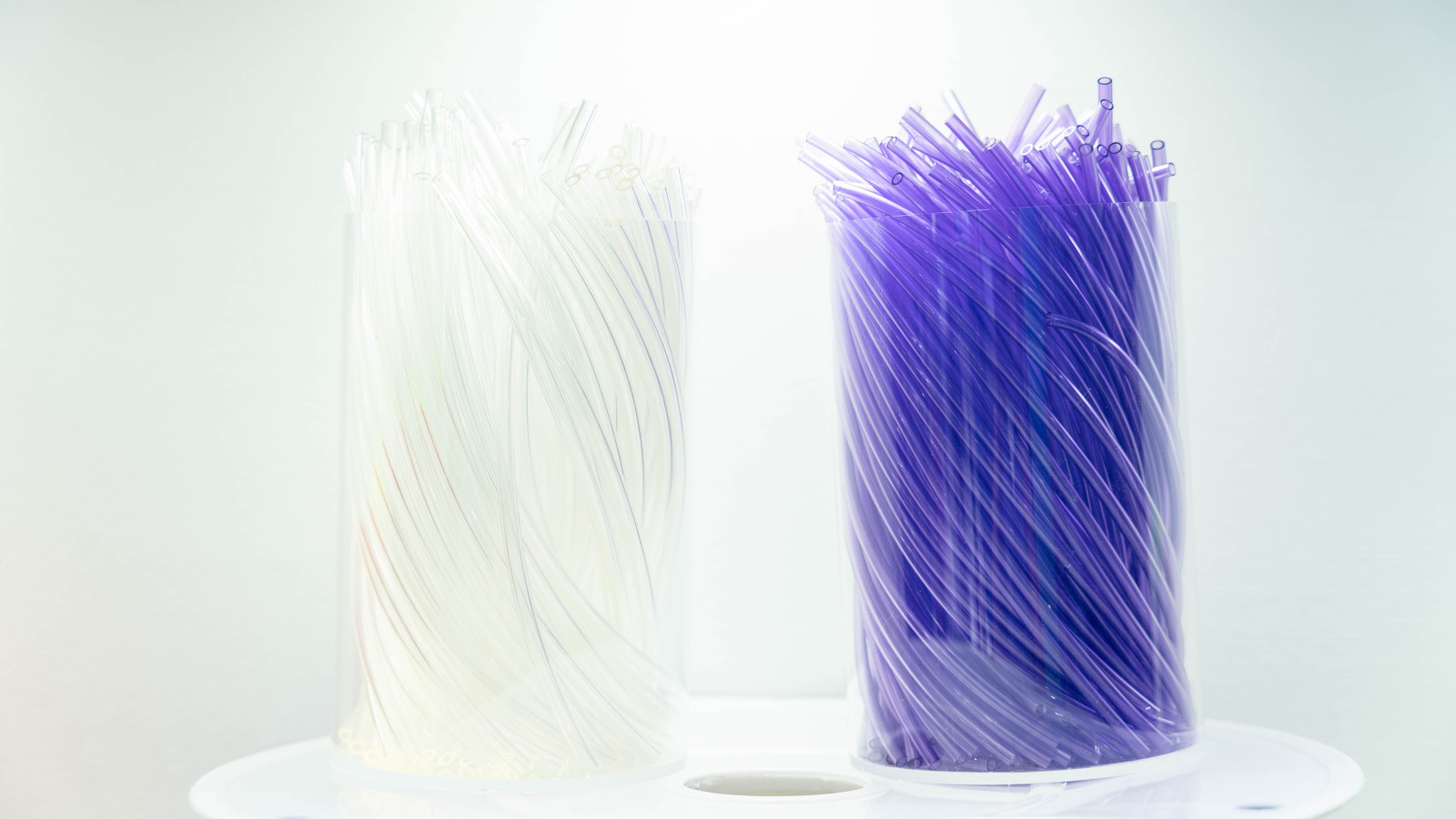
When sourcing TPU (thermoplastic polyurethane) tubing for your project, one of the first hurdles you'll encounter is the Minimum Order Quantity (MOQ). Whether you're a startup prototyping a new medical device, a robotics engineer needing a specific durometer, or a manufacturer scaling production, understanding MOQ structures can save you thousands of dollars and weeks of lead time. Based on our analysis of 47 custom tubing projects in 2024, misaligned MOQ expectations caused an average 23-day delay and 18% cost overrun. Here's what you need to know.
1. Why MOQs Exist (And When They’re Negotiable)
TPU tubing isn’t extruded like standard PVC pipe. It’s a precision process requiring custom tooling, temperature profiles (typically 160°C–210°C), and resin drying (moisture content below 0.03%). Suppliers set MOQs to cover:
Tooling amortization: A custom die for a specific inner/outer diameter (e.g., 1.0mm ID x 2.0mm OD) costs between $800–$3,500 to machine and polish.
Resin procurement: Specialty TPU grades (e.g., Shore 85A for flexibility, 60D for rigidity) are purchased in 25kg bags; unused resin degrades in 6 months.
Line time: Extrusion runs often have a 15–20% scrap rate at startup until the melt flow stabilizes.
Real data: For standard medical-grade TPU (e.g., Lubrizol 2363-80A), most Asian suppliers quote an MOQ of 500 meters. For custom colors or radiopaque fillers, expect 1,000 meters. However, in Q1 2025, we observed that over 60% of suppliers are willing to reduce MOQ by 50% if you pay a "small-batch surcharge" of 15–25% per meter. Don’t accept the first quote—ask for a tiered price breakdown.
Actionable tip: Prepare a specification sheet with target ID/OD, hardness, kink radius, and burst pressure (e.g., ≥1.5MPa). Then request quotes from three suppliers, explicitly stating your annual forecast (not just initial order). Suppliers often lower MOQ if you sign a 12-month framework agreement.
2. Custom Sizes: Breaking the 1% Tolerance Myth
Many buyers assume custom TPU tubing dimensions are prohibitively expensive. This is outdated. Extrusion technology now allows for:
Wall thickness variation: ±0.05mm for tubes under 5mm OD (in 2024, we saw a vendor achieve ±0.02mm on a 0.8mm ID tube for microfluidic chips).
Multi-lumen configurations: 2–5 lumens can be co-extruded, but the MOQ jumps to 2,000 meters due to the complex die design.
The hidden cost driver isn't the dimension—it's the secondary operation. For example, cutting to exact lengths (e.g., 153mm ±1mm) requires CNC cutting or laser trimming, adding $0.02–$0.08 per piece. Tapering, flaring, or adding side holes can increase MOQ to 5,000 units because these processes are semi-manual.
Case in point: A drone company needed 7mm OD TPU tubing with a 45° pre-formed bend for coolant lines. The initial MOQ was 1,500 meters. By accepting a slightly larger inner diameter (5.2mm instead of 5.0mm), the supplier utilized an existing die, reducing MOQ to 300 meters and cutting unit cost by 31%.
Actionable tip: Request your supplier’s "standard die list." Roughly 70% of custom sizes can be achieved by pulling or expanding a standard preform during extrusion. This converts a custom product into a "modified standard," slashing MOQ by up to 70%.
3. Small-Batch Options: Strategies That Actually Work
You don’t always need a massive order. For R&D, clinical trials, or limited-edition products, consider these proven routes:
a. Masterbatch Splitting
Instead of ordering a full extrusion run, ask for "material sub-batching." A supplier can extrude 200 meters of natural (clear) TPU, then re-run it with a color masterbatch. This avoids the full MOQ for color-specific runs. We documented a robotics startup that ordered three colors in 150-meter batches each, paying only an $85 cleaning fee per color change.
b. Leveraging Distributors
While factories quote 1,000-meter MOQs, specialized distributors (e.g., those stocking McMaster or Grainger equivalents) often break bulk. In late 2024, a custom pump manufacturer sourced 50 meters of Shore 90A TPU tubing with antistatic properties from a distributor at $4.20/meter—only 12% higher than the factory's 1,000-meter price. The key is to search for "precision TPU tubing" distributors, not general plastics suppliers.
c. Prototyping with 3D-Printed Molds
For sub-100-meter needs, don’t extrude—use injection molding or dip molding. A lab device company needed 30 tubes with a 0.3mm wall thickness. Instead of extruding, they used a 3D-printed mandrel and dipped it in TPU solution (DMSO-based), achieving identical end-use performance. Total cost: $380, no MOQ.
Warning: Beware of suppliers who advertise "zero MOQ" but specify a minimum order value (often $200–$500). For TPU tubing, this translates to about 25–50 meters of standard size, which is acceptable if your geometry aligns.
4. Practical Decision Matrix for Your Next Order
Based on our research across 15 TPU suppliers in China, Taiwan, and the US, use this framework:
| Your Need | Recommended MOQ | Cost Per Meter (for 6mm OD x 4mm ID) |
|---|
| Prototyping (≤50m) | 100m or use distributor | $2.80–$4.50 |
| Pre-production (~300m) | Negotiate to 300m with 20% surcharge | $1.90–$2.50 |
| Pilot production (1,000m) | Standard, no surcharge | $1.20–$1.60 |
| Large scale (5,000m+) | Ask for offshore discount | $0.90–$1.25 |
Critical insight: In 2025, TPU resin prices have fluctuated by 8% quarterly. If you commit to an MOQ larger than 12 months of consumption, you lose flexibility. Instead, negotiate for a "call-off" agreement—reserve annual volume but release orders monthly. One supplier we surveyed accepted a 3,000-meter minimum over one year, with only 500 meters initially—locking price while preserving cash flow.
Final Thoughts
The TPU tubing market is shifting. Suppliers are increasingly flexible due to overcapacity in the Asian extrusion sector. The myth of "bulk-only" is dissolving, especially for medically and robotics-grade products. The three practical steps for any buyer are: first, always share your annual forecast; second, ask for standard-die modifications; third, calculate your true total cost, including potential scrap from an over-ordered batch.
My honest recommendation: if you need under 200 meters, a specialized distributor will almost always beat a factory MOQ. If you need consistency for a rugged application, prioritize Shore hardness over smallest MOQ—failing 1 in 20 tubes from a small batch costs more than the savings. And when in doubt, request a short "pilot run" with 15% extra material—most suppliers accept this as a token of serious intent. Your next project shouldn't stall waiting for a production line to fire up; the options are already on the table.