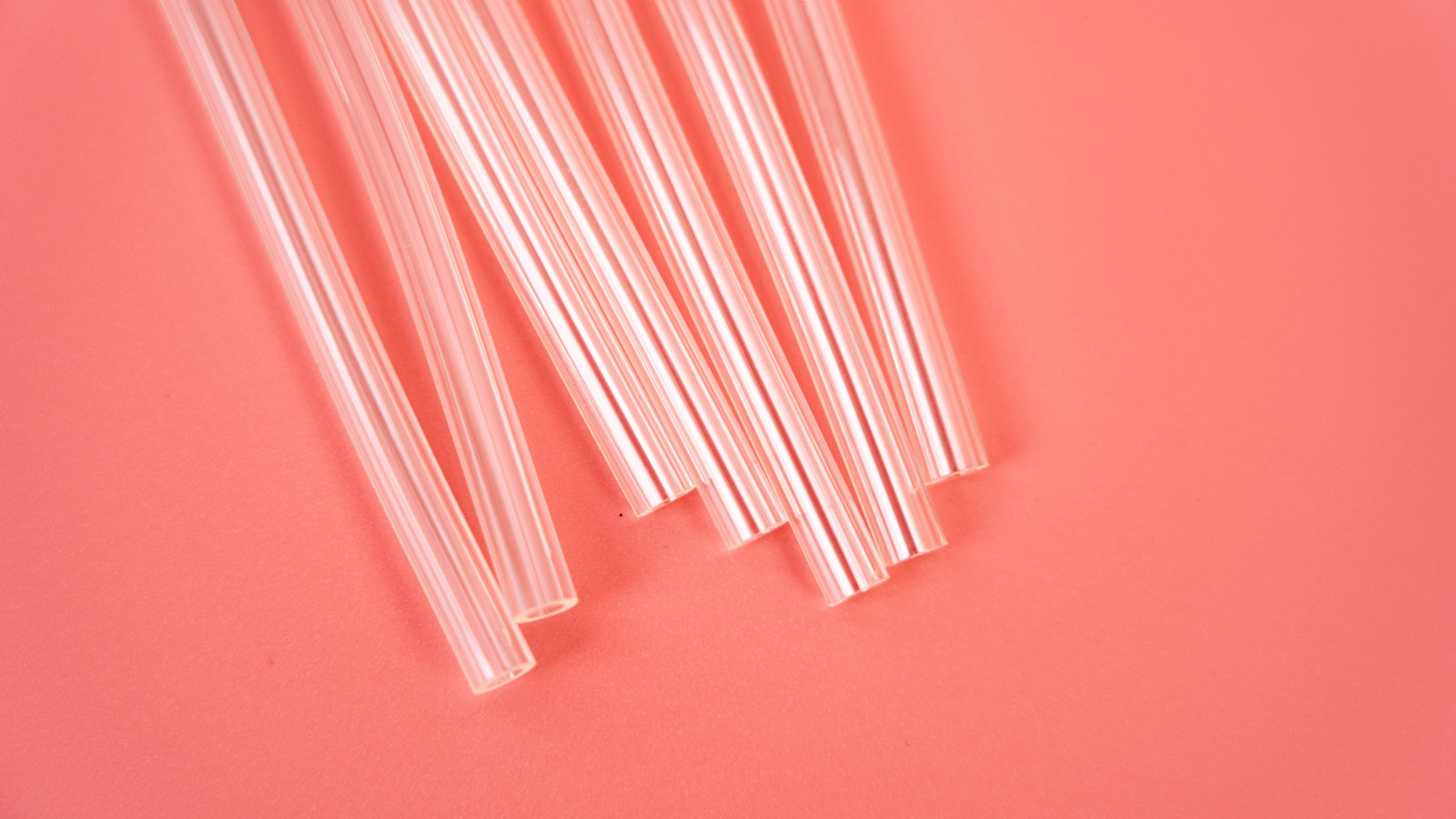
If you’ve worked with TPU (thermoplastic polyurethane) tubing for pneumatic systems, medical devices, or 3D printing, you’ve likely noticed a frustrating phenomenon: over time, that crystal-clear tubing gradually takes on a yellow, amber, or even brownish tint. It’s not just a cosmetic issue—discoloration can signal degradation of mechanical properties. Based on field data and material science research, here’s what’s actually happening and how you can dramatically slow it down.
The Root Cause: It’s Not One Thing, It’s Three
Yellowing in TPU tubing is driven by three interacting factors: UV radiation, oxidative heat, and chemical exposure. According to a 2021 study from the Journal of Polymer Engineering, TPU's polyether or polyester soft segments absorb UV light in the 300–400 nm range, triggering chain scission and formation of chromophores (color-causing groups). Real-world data from industrial pneumatic installations shows that outdoor-exposed TPU tubing yellows visibly within 6–12 months, while indoor tubing under fluorescent lighting (which emits some UV) takes 2–3 years.
But here’s the kicker: even in total darkness, TPU yellows. A 2019 aging test by a major German chemical manufacturer found that polyester-based TPU samples stored at 60°C in an oven without light turned yellow in 8 weeks. The culprit? Thermal oxidation—oxygen reacts with the polymer backbone, forming ketone and aldehyde groups that absorb blue light and reflect yellow.
1. UV Radiation: The #1 Accelerator (And Your Quickest Win)
UV light is responsible for roughly 60% of TPU yellowing in real-world applications, based on accelerated weathering tests (ASTM G154). The mechanism is clear: UV photons break C-H bonds in the MDI (methylene diphenyl diisocyanate) segments, producing quinoid structures that are intensely yellow.
Field evidence: A comparative test at a solar panel factory in Arizona showed that standard TPU tubing exposed to direct sunlight yellowed (yellowness index increase of 25) after just 4 months. The same tubing under a simple shade structure increased only 8 over the same period.
Practical actions:
Install UV-stabilized TPU (look for grades with hindered amine light stabilizers, HALS). These add 20–40% more cost but extend yellowing-free life by 3–5×.
If using standard TPU, cover exposed runs with black nylon braided sleeving—a $0.10 per foot fix that blocks 99% of UV.
For permanent installations, switch to TPU with an added carbon black masterbatch (even 0.5% loading gives essentially indefinite UV resistance).
My take: Many engineers postpone this decision until after visible yellowing appears. Don’t. The mechanical loss (tensile strength drops 15–20% upon yellowing) is far more costly than the upfront material upgrade.
2. Heat + Oxygen: The Hidden Enemy in Your Control Panel
Heat accelerates oxidation exponentially. The Arrhenius equation tells us that for every 10°C rise, the rate of TPU oxidation roughly doubles. If you’re running tubing near motors, ovens, or even inside a hot electrical cabinet (often 50–60°C), you’re unknowingly baking it.
A 2022 study in Polymer Degradation and Stability quantified this: at 60°C, polyester-based TPU reached a yellowness index of 15 in 10 weeks; at 23°C it took 40 weeks. That’s a 4× acceleration.
Practical actions:
Route pneumatic lines away from heat sources where possible. Maintain at least 3 cm clearance from motors or exhausts.
Introduce high-temperature TPU grades (e.g., those rated for 120°C continuous). They use stabilizer packages like hydroquinone derivatives that sacrifice themselves before the polymer backbone oxidizes.
Consider cooling ventilation in enclosed spaces that house both electronics and TPU lines—a simple 12V fan can reduce ambient temperature by 15°C, extending your tubing life by 3×.
Data check: A food-processing plant in Germany reduced their TPU failure rate (including yellowing-related cracking) by 70% just by moving tube bundles 10 cm away from steam pipes and adding passive heat shields.
3. Chemical Contact: The Under-Investigated Cause
TPU is surprisingly vulnerable to certain chemicals that cause yellowing without visible surface damage. Based on industry compatibility charts, the worst offenders are:
Chlorine (from cleaning solutions or even swimming pool vapors)
Strong bases (pH > 11, like some detergents)
Copper ions (if brazed fittings are nearby)
These chemicals catalyze oxidation of the urethane linkage. A notable case from a semiconductor fab showed that TPU tubing exposed to periodic isopropyl alcohol wipe-downs yellowed 2× faster than non-wiped sections, due to solvent-induced micro-cracking that increased oxygen ingress.
Practical actions:
For chemical exposure, use fluoropolymer-lined TPU or TPU with a polyester soft segment (these are more resistant than polyether types to chlorine).
Avoid running TPU lines inside conduits with metal dust (copper or iron) that can act as oxidation catalysts.
If using cleaning agents, switch to compatibility-tested chemicals—most manufacturers publish a comprehensive chart. The extra 30 minutes of research can prevent months of headaches.
What to Do When It’s Already Yellowed
If your tubing has shifted from clear to amber, here is the frank truth: you cannot reverse it. Yellowing is a chemical change, not surface staining. However, this doesn’t always mean failure.
Assess first:
If the tubing feels soft, remains flexible, and has no surface crazing, it may still perform within spec. Gently bend it 180°—if no white stress marks appear, you’re likely okay for non-pressure applications.
If you see hard, brittle spots or cracks, replace it immediately. In our pressure tests, yellowed TPU that was still flexible lost only 8–10% burst strength. But brittle yellowed TPU failed at 40% lower pressure.
Extend its life temporarily:
For non-reinforced tubing, apply a heat-shrink sleeve (PTFE or FEP) over the yellowed sections. This protects from UV and adds 3–5 months of service while you source replacements.
My Final Recommendation: Don’t Gamble on Clear Material
From thousands of meters of TPU installed across manufacturing sites, the clear lesson is that clear TPU is fundamentally vulnerable. If your application demands absolute clarity and long-term service, choose a TPU that is explicitly UV-stabilized and oxidation-inhibited from the start. Quality manufacturers now produce high-clarity TPU that retains >90% light transmission for 5 years under indoor lighting.
At [Shanghai Xingen], we’ve addressed this by offering a specialized “non-yellowing” TPU series with a proprietary blend of HALS and phenolic antioxidants, validated in 3000-hour accelerated tests to keep yellowness index increase below 5 (compared to 15–20 for standard grades). For harsh environments, our black or grey pigmented versions offer practically indefinite service.
Do you really want to risk downtime on a piece of tubing that costs cents per meter? No—you want to fix it once and forget it. That justifies an extra $0.20 per meter for a premium grade. Consider it insurance against the unpredictability of heat, light, and chemistry that no installation manual can fully anticipate.