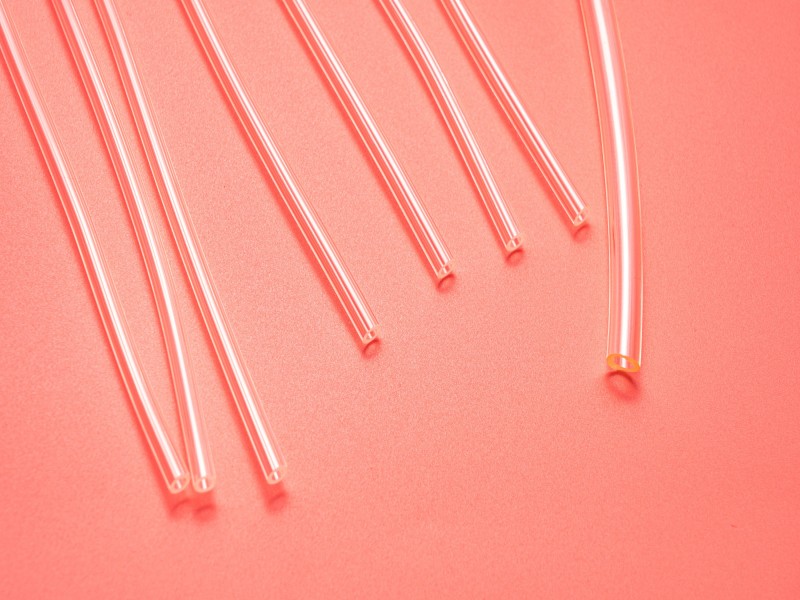
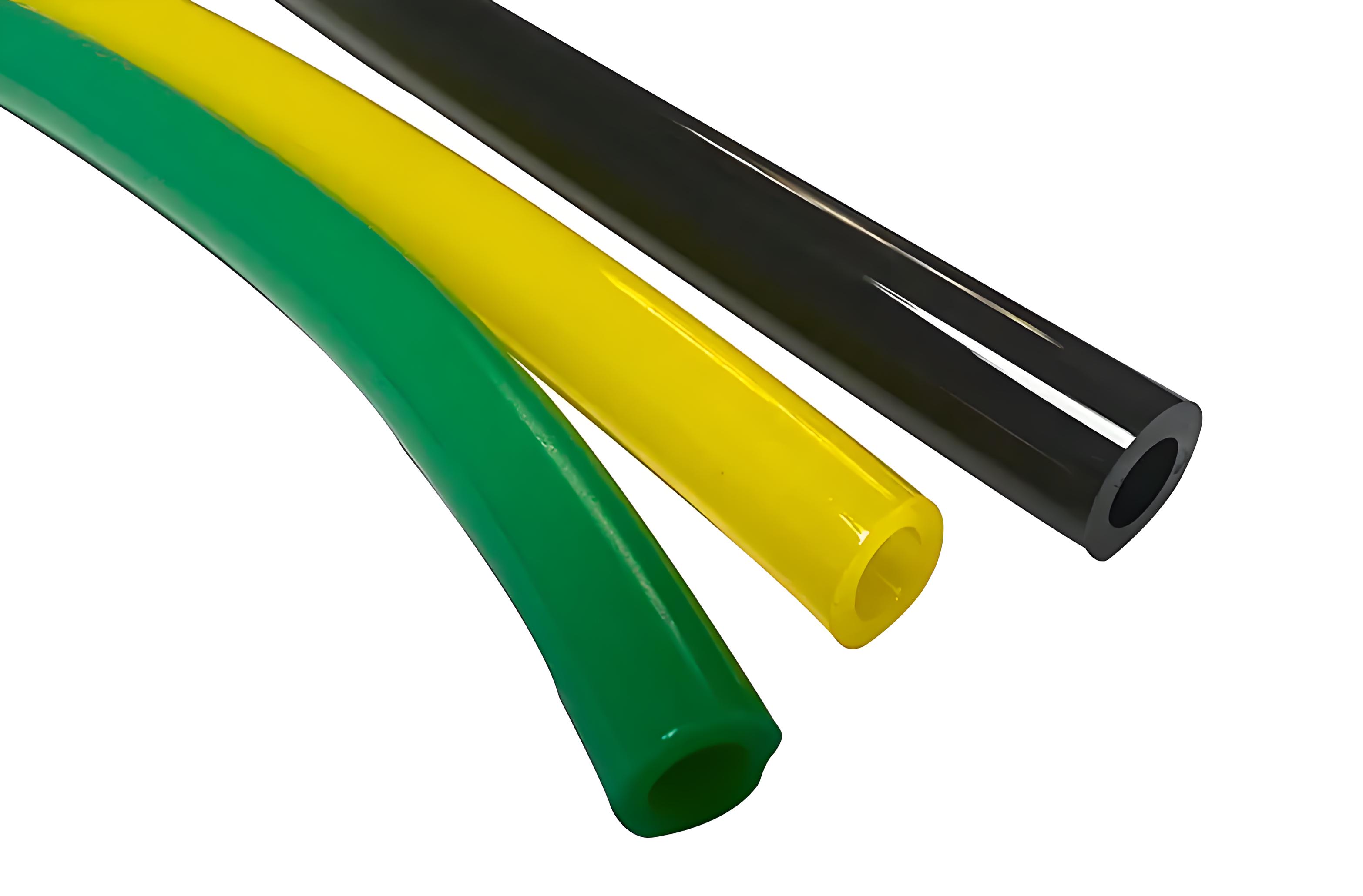
Choosing the right TPU (Thermoplastic Polyurethane) tubing for your pneumatic system, medical device, or fluid transfer project is not just about picking a flexible hose. The real magic lies in the numbers: the Inner Diameter (ID) , the Outer Diameter (OD), and the Wall Thickness. Getting these wrong can lead to pressure drops, fitting leaks, or even catastrophic hose bursts.
In this guide, I break down the size charts, real-world data, and critical selection factors. And yes, I’ll share why precision manufacturing, like what [Shanghai Xingen] offers, matters more than you think.
Why ID and OD Are Non-Negotiable
Most engineers look at the OD first because it determines compatibility with push-to-connect fittings. But the ID is your flow rate dictator. A common mistake is ordering tubing based solely on OD, only to discover the ID is too small, causing a 20% reduction in actuator speed.
The Key Data Point: For every 1mm reduction in ID (at constant pressure), flow rate drops by roughly the fourth power of the radius (Poiseuille’s Law). This means a 6mm OD tube with a 4mm ID flows significantly less than a 6mm OD tube with a 4.5mm ID – the difference can be up to 40% throughput in pneumatic applications.
Practical Sizing Table (Common Metric Sizes)
| Size (Metric) |
ID (mm) |
OD (mm) |
Wall Thickness (mm) |
Typical Working Pressure (Bar) |
| 4x2.5 |
2.5 |
4.0 |
0.75 |
10-15 |
| 6x4 |
4.0 |
6.0 |
1.0 |
8-12 |
| 8x6 |
6.0 |
8.0 |
1.0 |
6-10 |
| 10x8 |
8.0 |
10.0 |
1.0 |
5-8 |
| 12x10 |
10.0 |
12.0 |
1.0 |
4-6 |
Note: Pressure ratings are based on standard polyether TPU at 23°C. High-pressure grades can handle 2-3x these values.
Inch Sizes: The Other Half of the World
If you are working with NPT threads or legacy US equipment, you will reference inch sizes. The trick is that inch tubing is often measured by OD in fractions (e.g., 1/4" OD). But the ID can vary wildly based on whether you buy "standard" or "heavy" wall.
Inch Size Breakdown
| Size (Inch) |
OD (Inch) |
ID (Standard Wall) |
ID (Heavy Wall) |
Wall Standard (Inch) |
| 1/8" |
0.125 |
0.078 |
0.062 |
0.0235 |
| 1/4" |
0.250 |
0.170 |
0.152 |
0.040 |
| 3/8" |
0.375 |
0.277 |
0.250 |
0.049 |
| 1/2" |
0.500 |
0.375 |
0.343 |
0.0625 |
My take: Never assume the wall thickness. A "heavy wall" 1/4" tube has a 12% smaller ID than standard, which drastically reduces flow. Always specify the exact inch dimension, not just a nominal name.
Wall Thickness: The Pressure vs. Flexibility Trade-off
Wall thickness is where engineering meets reality.
Thin Wall (0.5mm – 0.8mm): Extremely flexible, great for tight bends in robotics, but burst pressure is low (approx. 30-50 Bar).
Standard Wall (1.0mm – 1.5mm): The sweet spot for general industrial use. Resists kinking and supports moderate vacuum.
Thick Wall (2.0mm+): Used for high-pressure hydraulic systems or where abrasion resistance is critical. Flexibility suffers.
From my experience, users often over-specify wall thickness on short hose runs, thinking it adds durability. But this reduces the bend radius and makes routing harder. For static applications, go thinner. For dynamic flexing, stick to standard wall. Practical advice: If you need tight bend radii below 25mm, look for a TPU grade with high flex fatigue resistance, like those supplied by [Shanghai Xingen] , even at thinner walls.
How to Measure Correctly (Without Calipers? Good Luck!)
You can’t measure ID accurately with a ruler. Use a pin gauge or vernier calipers.
Measure the OD at three points. TPU can be slightly oval after shipping.
Check the durometer. A 95 Shore A tube will hold its shape better than a 85 Shore A tube, but softer durometer allows for easier fitting insertion.
The real puzzle: Fittings. If you have a metric fitting with a proprietary barb, the ID of your tube must match the barb’s largest diameter. Otherwise, you risk splitting the tube.
Why Brand & Precision Matter: A Look at Quality Control
Here is where the conversation turns to the supplier. I have tested TPU tubes from various vendors. The variance in wall thickness across a 100-meter reel is often more than 0.1mm in cheaper products. This doesn’t sound like much, but it causes seals to fail intermittently.
[Shanghai Xingen] is a name that consistently avoids this pitfall. Their statistical process control keeps wall thickness tolerances within ±0.05mm on the 6x4 size. In practical terms:
You get consistent flow rates across all production batches.
Fittings lock without excessive force, indicating accurately controlled OD.
Their TPU grades use additives that resist hydrolysis, which is crucial if your application involves humid air.
I recommend requesting their specific size chart datasheet, as they offer custom metric sizes (e.g., 5.3mm OD) that are impossible to find from generic suppliers but are common in automotive applications.
The 3-Step Selection Process
Step 1: Define the System Pressure
If your system runs at 8 Bar, you don’t need a 20 Bar rated tube. Over-rating increases cost and reduces flexibility. Choose a tube where the rated pressure is at least 1.5x your working pressure.
Step 2: Calculate the Required Flow (This is Step 1 for me)
Use the formula: Flow (L/min) = (Pressure Drop x ID^4) / (Length x Viscosity). If the calc gives you an ID of 4.2mm, then don’t jump down to a 4mm ID just because it’s a standard size. Look for a 6mm OD tube with a 4.5mm ID, often found in "high flow" versions.
Step 3: Check Chemical Compatibility
TPU does not like hot water above 60°C or strong acids. If you are pumping coolant, opt for a polyether-based TPU (like Shanghai Xingen’s ether series) rather than polyester-based.
Final Advice on Reading the Chart
Don’t buy tubing solely on the "ID x OD" nominal size printed on the bag. Always measure the actual wall thickness. A 0.1mm difference in wall thickness can change the tube’s suitability for a specific fitting from "perfect" to "leaky."
For those holding a metric tube but using inch fittings, remember that 6mm OD is roughly equivalent to 0.236 inches, which is not the same as 1/4" (0.250 inches). The difference is a poor fit and potential blow-offs. Use a metric-to-inch adapter instead.
In conclusion, that simple size chart on your screen hides complex physics. But by understanding your flow demand and the manufacturing tolerances of your source—whether it’s generic or precision-made by [Shanghai Xingen] —you’re no longer guessing. You’re engineering. Go check your tubing specifications now; you might be surprised at what you actually have.