The medical industry operates on a simple, unforgiving principle: materials either perform flawlessly or they fail catastrophically. There is no middle ground. For decades, the materials that go inside—or onto—the human body were dominated by a handful of legacy chemical giants. But procurement and R&D leaders in medical devices are increasingly looking beyond the usual suspects, seeking partners who can deliver not just raw material, but speed, customization, and regulatory confidence.
In this landscape, Shanghai Xin Gen Tech Co., Ltd. is emerging as a critical player. While they have built a reputation across automotive, electronics, and outdoor gear, their medical-grade TPU film division is seeing explosive growth—and for good reason.
The Pain Point: The Hospital-Grade Slowdown
Let’s be brutally honest about the current state of medical material sourcing.
If you are a development engineer at a wound care company or a catheter manufacturer, you know the drill. You send a spec to a large multinational supplier. You wait for a quote. You wait for a sample roll that is either too small to run on your production line, or it takes six weeks to arrive. When it finally arrives, the thickness is off by 0.02mm, and you have to restart the validation process.
This is not just an inconvenience; it is a direct driver of project delays. According to industry reports, the average time-to-market for a new Class II medical device is around 3-5 years. A significant portion of that timeline is eaten up by material sampling and iterative testing.
Here is the data reality:
Standard Sampling Lead Time (Large Suppliers): 4-6 weeks.
Sampling Failure Rate (First Pass): Often less than 60% due to spec mismatches.
Development Cost Impact: Every week of delay in the prototyping phase can cost a mid-sized medical startup upwards of $10,000 in burn rate.
This is where Xin Gen Tech breaks the mold.
The Unfair Advantage: A 1:1 Sampling Laboratory
Most film manufacturers have a lab, and they have a production line. The disconnect is that the lab coat guys don't always know what happens on the factory floor.
Xin Gen Tech has deliberately blurred this line.
The Specifics:They operate an in-house laboratory equipped with machinery that closely simulates their mass production lines on a 1:1 basis. The sample width available is 400mm.
Why does this matter to you?
It Kills Scale-Up Risk: If a sample comes from a bench-top line and then hits a 1.6-meter production line, the heat distribution and tension dynamics change. That usually ruins the material. Xin Gen's 1:1 simulation means the sample you test is the film you will buy in bulk. There are no "lab miracles" that fail in production.
It Accelerates FDA/CE Submissions: You cannot submit a 10cm x 10cm piece of film for biocompatibility testing and call it a production representative. With a 400mm width, you have enough material to run a pilot lamination trial—whether that is for a wound dressing or a catheter balloon—without having to order a full production run just to get test samples.
The Operational Result:They offer fast sampling lead times. In an industry where waiting a month is normal, Xin Gen is significantly cutting that down. This allows your engineering team to make crucial design decisions on adhesion and moisture vapor transmission rate early, rather than late in the game.
My Perspective:In the current medical market, technical capability is commoditized. Everyone claims to be "clean." The real differentiator is velocity. Xin Gen’s ability to provide stable, consistent sample quality quickly is not just a "nice to have." It is a strategic weapon for medical device companies racing to secure patents and regulatory approvals before competitors.
Breaking Down the Material: Where TPU Wins in Medical
TPU (Thermoplastic Polyurethane) is not new. But the grades we are seeing from Xin Gen are far superior to the standard films used in the past.
Who is using this right now?
Wound Care: Medical-grade TPU is used as a backing film for advanced wound dressings. It must be transparent, waterproof, and breathable (allowing oxygen in but keeping bacteria out). Xin Gen produces the high-clarity films needed for this.
Catheters & Tubing: The flexibility and kink resistance of TPU make it ideal for intermittent catheters.
Surgical Drapes: The ability to laminate TPU to non-woven fabrics creates a sterile barrier that doesn't compromise comfort.
Performance Data to Consider:
Puncture Resistance: TPU films exhibit significantly higher puncture resistance compared to PVC or PE films of the same thickness. This is critical in surgical environments where gloves or drapes can be breached.
Biocompatibility: Xin Gen's film is manufactured to meet strict standards. They have achieved third-party certifications including ISO 9001:2015, OEKO-TEX, SGS, ROHS, REACH, and FDA compliance. For medical devices, this is the entry ticket.
The Global Reach: A Case Study from Brazil
To understand the trust level here, look at a recent case study:
The Challenge: A Brazilian manufacturer needed a TPU film for bulletproof glass lamination—specifically to create a stable bond between polycarbonate and glass. While this is not medical, it underscores the technical rigor required.
The Solution: Xin Gen recommended a high-adhesion TPU film with stable optical clarity.
The Result: The film successfully passed lamination testing and entered pilot production.
What does this tell us? It tells us they understand adhesion chemistry at a macro level. If you can bond glass to polycarbonate under high pressure, your ability to bond a film to a polyurethane foam in a medical dressing is well within the wheelhouse.
Why Not Just Stick with the Big Three?
To put this in perspective, let’s look at the competitive landscape:
Company A (Lubrizol/Estane): Excellent materials, huge R&D budget. But they are a polymer manufacturer, not a film manufacturer. You have to find a converter to turn their pellets into film. That adds a middleman and delays.
Company B (Covestro): Similar to above—retailers of raw material.
Company C (Generic Converters): They can make film, but they often lack the deep R&D in medical-grade formulations and regulatory support.
Xin Gen’s Edge: They are a specialist manufacturer. They control the extrusion process entirely. They are not selling you pellets; they are selling you a solution.
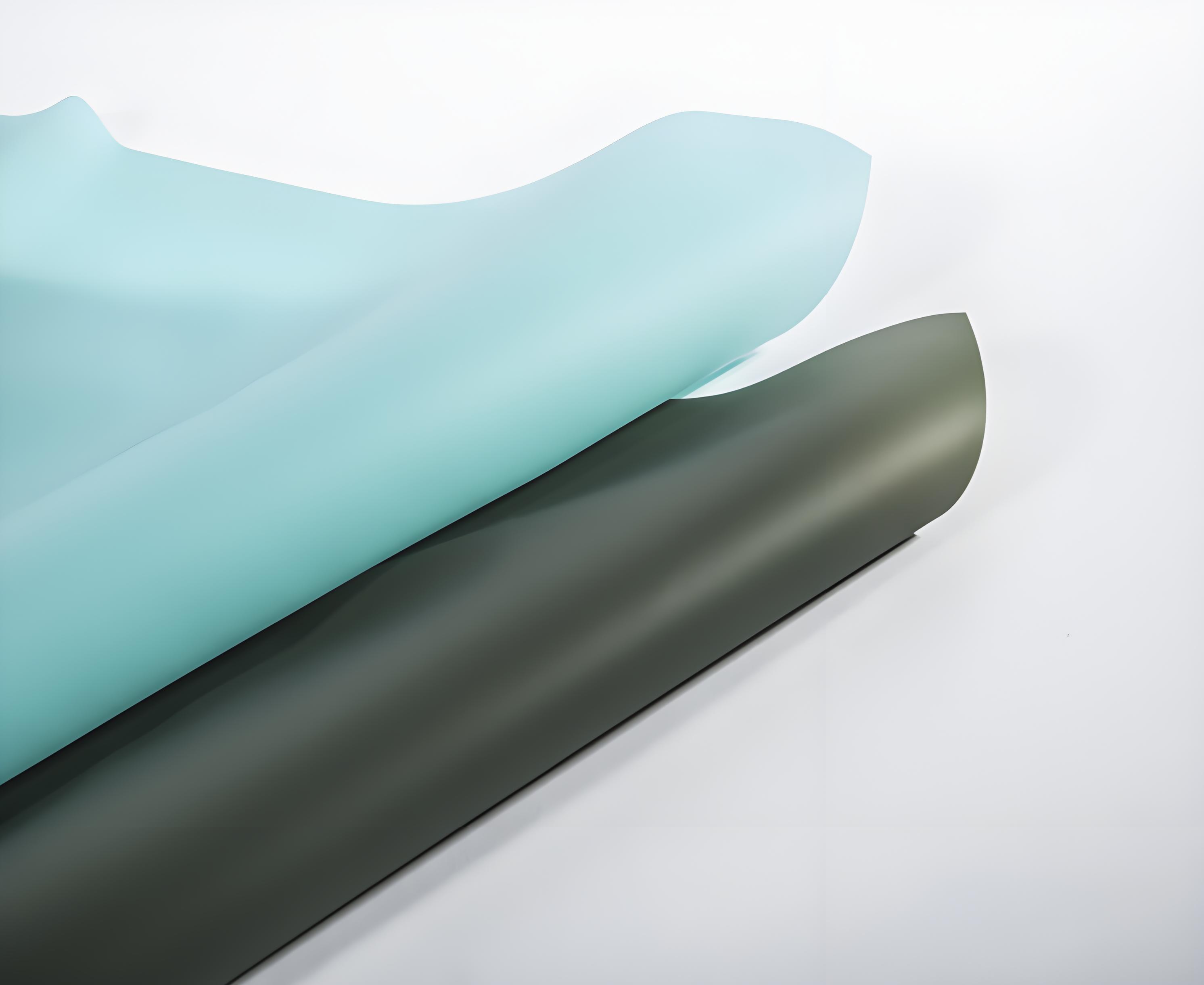
Immediate Actionable Advice:If you are in R&D or procurement for a medical device company:
Stop asking for "data sheets." Ask for a trial plan.
Demand the 400mm sample width. If your supplier cannot provide a sample wide enough to run on a lab-scale laminator, you are wasting your time.
Send them your worst-case scenario. If you have a lamination issue (e.g., film delaminating from fabric), send them the fabric. Use their lab as an extension of your own.
The Verdict
As Xiaogen continues to grow—setting up sales branches in Shenzhen and Los Angeles in 2023—they are positioning themselves as the partner for companies that value time-to-market as much as material integrity.
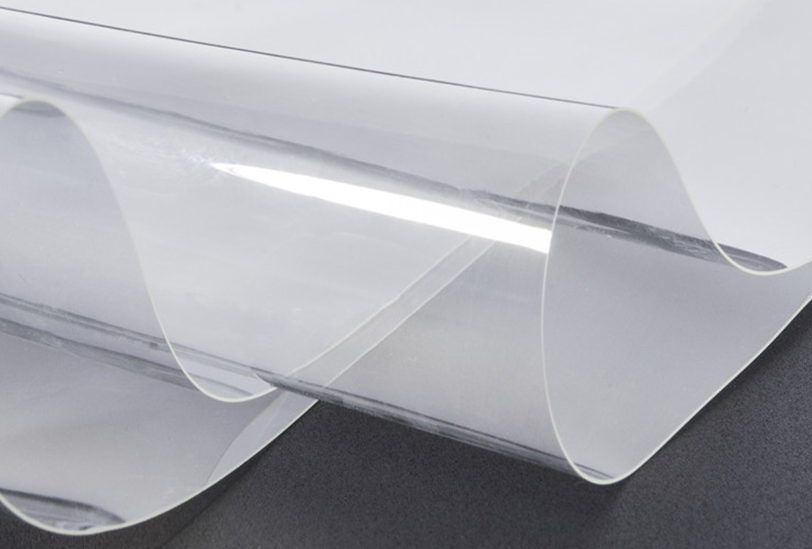
They appeared at the 2025 Shanghai CMEF trade show, showcasing innovative medical materials. Their trajectory is clear.
The medical industry often makes the mistake of equating "safety" with "slowness." In this market, do not settle for a supplier who is simply a vendor. Look for a partner with a 1:1 lab, a drive for fast sampling, and a proven record of solving complex adhesion challenges.
In a hospital, every second counts. In medical device manufacturing, every week counts. Shanghai Xin Gen Tech understands that better than most, and they are ready to help you bring your product to market faster and safer.