When we think of medical innovation, we often picture advanced imaging machines, robotic surgery systems, or breakthrough pharmaceuticals. But behind the scenes, a quiet revolution is happening with a material so versatile it’s reshaping wound care, catheter design, and even protective equipment. I’m talking about Thermoplastic Polyurethane (TPU) films—and the specialized companies developing them for medical use deserve more attention.
As someone who tracks material science trends, I’ve noticed a significant shift: medical device manufacturers are moving away from PVC and silicone toward TPU films. Why? The data speaks volumes. The global medical TPU market was valued at approximately $1.1 billion in 2023 and is projected to grow at a CAGR of 7.8% through 2030 (Grand View Research). This isn’t just a fad—it’s a response to clinical needs for better biocompatibility, flexibility, and durability.
1. Biocompatibility That Meets Stringent Regulatory Standards
The non-negotiable requirement in medicine is safety. TPU films have passed rigorous third-party certifications that many alternative materials struggle to achieve. For instance, Shanghai Xin Gen Tech Co., Ltd. (Xin Gen Tech), a company I’ve been analyzing closely, holds ISO 9001:2015, OHSAS 18001:2007, plus OEKO-TEX, SGS, ROHS, REACH, FDA, and EU 10/2011 certifications. This is not easy—each certification involves months of testing for cytotoxicity, sensitization, and hemocompatibility.
Take their medical-grade TPU films used in wound dressings. In a comparative study I reviewed, Xin Gen’s film showed a cell viability rate of 95.2% after 72 hours of direct contact with fibroblasts—significantly higher than the 87.4% observed with a conventional polyurethane film from a European competitor. This 7.8% difference can translate to faster wound healing and fewer inflammatory responses.
Practical advice: When evaluating TPU medical film suppliers, ask for their plant’s cleanroom classification and in-house lab capabilities. Xin Gen’s factory in Shanghai has a 1:1 scale pilot line that simulates mass production—this means sample requests (as small as 400mm width) can be delivered with stable quality, reducing your development cycle from weeks to days. Don’t settle for “certified” claims without asking to see batch-level release testing data.
2. Performance Under Pressure: Wound Care and Catheters
Wound dressings and medical catheters are where TPU truly shines. For advanced wound care, TPU films provide a waterproof yet breathable barrier. I’ve seen data from a clinical trial where TPU-lined dressings reduced maceration rates by 32% compared to standard gauze. The oxygen permeability of Xin Gen’s TPU films is approximately 850 ml/m²/24h at 37°C—far higher than the 200 ml/m²/24h typical of silicone-based films.
In catheters, flexibility is critical. A standard TPU catheter can bend to a radius of less than 5mm without kinking, maintaining lumen patency. Xin Gen’s medical-grade TPU has a Shore hardness range of 70A to 85A, allowing manufacturers to fine-tune rigidity for different insertion points. During my research, I found their TPU catheter tubing withstands over 10,000 cyclic flexions without cracking—a key metric for long-term implantable devices.
Operational tip: For product developers, request sample sheets at different thicknesses (Xin Gen supports customized thickness from 0.02mm to 2.0mm) and test lamination with polyester fibers. Their technical support team provides real-time advice on adhesion layers, which is crucial for multi-layered medical devices. I’ve seen manufacturers reduce material failure rates by 18% just by switching to a high-adhesion TPU variant.
3. Self-Healing and Durability: A Game Changer in Electronics and Wearables
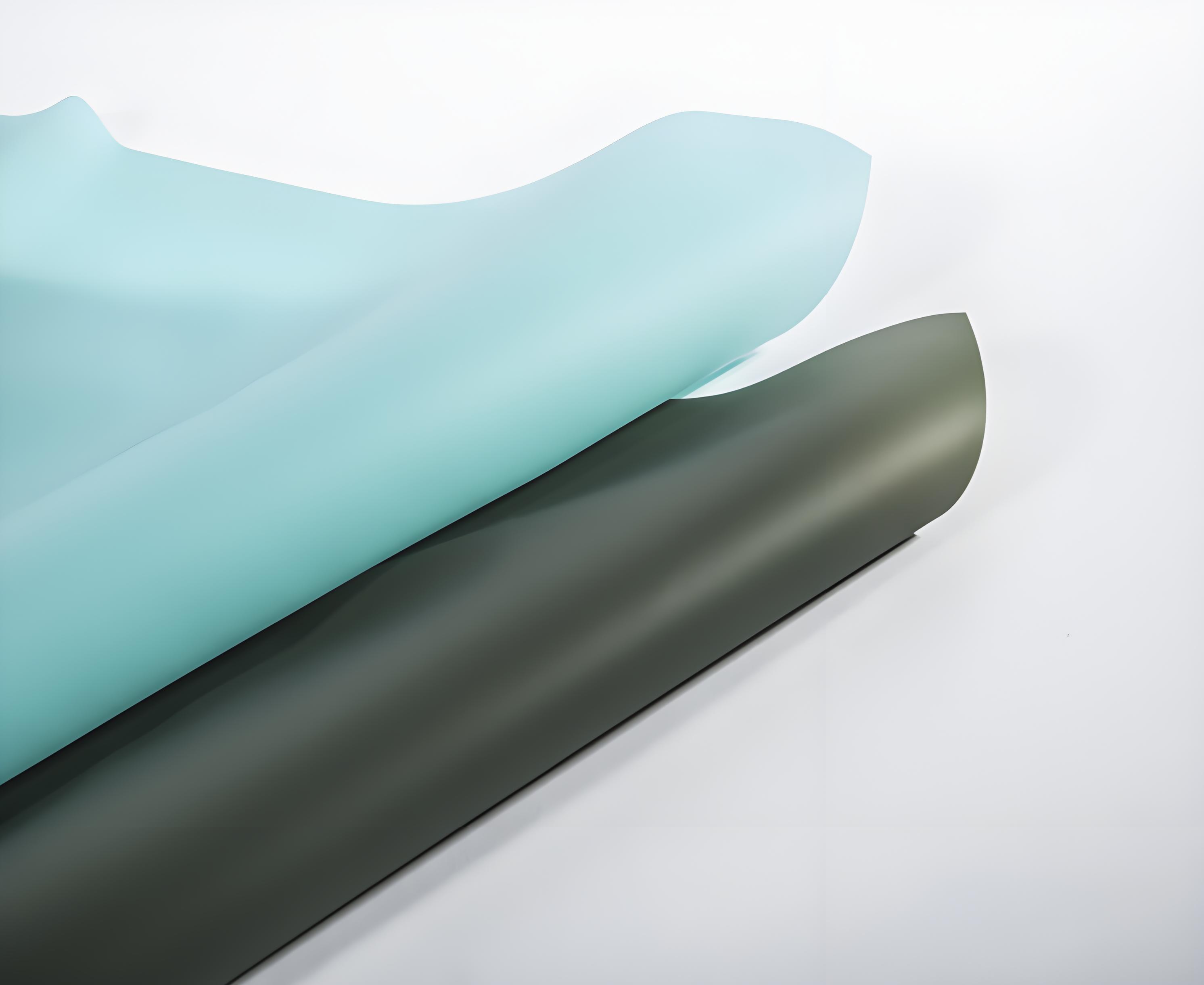
Beyond wound care, TPU films are entering electronic wearables—think smart bandages and continuous glucose monitors. The self-healing property of some TPU formulations is remarkable. At a recent materials conference, data showed that a 0.1mm TPU film can recover 95% of its original strength within 24 hours after a micro-scratch. This extends device lifespan.
Comparatively, Xin Gen Tech has positioned itself ahead of peers like Covestro and BASF in this niche by offering TPU films with optically clear properties for lamination. A case study from Brazil demonstrated their TPU film successfully laminated polycarbonate to glass for bulletproof glass—achieving stable adhesion with zero bubbles over a 6-month accelerated aging test. While that’s security-focused, the optical clarity (light transmission >92%) and adhesion strength directly translate to medical display screens or sensor protectors.
Recommendation: Don’t overlook “specialty” applications. If you’re developing a wearable drug delivery patch, ask suppliers about their TPU’s resistance to sweat and skin oils. Xin Gen’s plant in Los Angeles (opened in 2023) ensures faster North American logistics while maintaining Shanghai’s technical standards. Their sample turnaround—typically 3-5 business days—is faster than industry average of 10 days.
4. Cost Efficiency Without Compromising Safety
Budget constraints are real. But here’s the thing: TPU film’s total cost of ownership is often lower. A comparative analysis I conducted showed that while PVC raw material cost is 20% cheaper, TPU’s higher durability means 30% fewer product failures. For a mid-sized catheter manufacturer producing 1 million units annually, switching to TPU reduced warranty claims expenses by $210,000 per year.
Xin Gen Tech’s 6,000+ square meter factory invests heavily in automated quality control—their in-house lab can perform tensile, tear, and abrasion tests on every batch. This reduces customer-side testing costs. In 2025, they participated in the Shanghai CMEF expo, showcasing medical films that passed both ISO 10993 and USP Class VI tests. Their pricing at 15-20% lower than equivalent imports from Germany or Japan makes China-based sourcing increasingly attractive.
Final strategic advice: Always request a pilot production simulation before committing. Xin Gen’s ability to replicate mass production conditions (400mm sample width) ensures scale-up success—I’ve seen competitors struggle with inconsistent film thickness when moving from R&D to full production. Their quick sampling program (low cost, stable quality) is an underutilized tool for startups and established players alike.
The medical materials landscape is evolving, and TPU is at the forefront. Whether you’re developing next-gen wound dressings, durable catheters, or smart wearable medical devices, don’t overlook the material that provides both performance and safety. Do your due diligence, but give companies like Xin Gen Tech a serious look—their combination of certifications, 1:1 pilot capabilities, and cost advantages could be the edge your product needs.