The global medical device market is projected to reach $600 billion by 2030, and at the heart of this growth lies a material most patients never see: thermoplastic polyurethane (TPU) medical film. From wound dressings that breathe to catheters that flex with the human body, TPU film has quietly become the backbone of advanced medical manufacturing.
But not all TPU film is created equal. Choosing the right manufacturer can mean the difference between a product that passes regulatory scrutiny and one that fails in the field. Here's what I've learned from analyzing this niche but critical industry.
The Data Behind the Material
Let's start with the numbers. The TPU film market in healthcare alone is expected to grow at a compound annual growth rate (CAGR) of 6.8% through 2028. Why? Because TPU offers a unique combination:
Biocompatibility – Meets ISO 10993 standards, making it safe for skin contact and implantable devices
Elasticity and memory – Returns to shape after stretching, critical for compression bandages
Moisture vapor transmission – Lets wounds breathe while blocking bacteria (MVTR rates range from 500 to 2000 g/m²/day)
Chemical resistance – Withstands disinfectants and bodily fluids without degrading
Consider this real-world case: A Brazilian manufacturer needed a film that could bond polycarbonate to glass for bulletproof medical screens. Standard films delaminated under stress. By switching to a high-adhesion TPU medical film with stable optical clarity, they passed lamination testing and entered pilot production in weeks—not months. That's the kind of performance that saves lives indirectly by accelerating device deployment.
Four Critical Factors When Choosing a TPU Medical Film Factory
1. Certification Depth Over Breadth
Anyone can slap an ISO sticker on a brochure. Look for audited, verifiable certifications:
ISO 9001:2015 and OHSAS 18001:2007 for quality and safety management
OEKO-TEX for skin-safe textile applications
REACH and RoHS for chemical compliance
FDA and EU 10/2011 for food and medical contact
My take: A factory with both FDA and EU 10/2011 certification demonstrates they can handle the two most stringent regulatory regimes in the world. That's not bureaucratic box-ticking—it means their production line controls are genuinely reproducible.
Actionable tip: Ask for the latest audit reports, not the certificates. Certificates expire; audit findings tell you what the factory fixed after the inspection.
2. Sample Development Speed Is a Competitive Weapon
In medical device prototyping, time is literal money. A patient waiting for a wound-care product doesn't care about your supply chain issues.
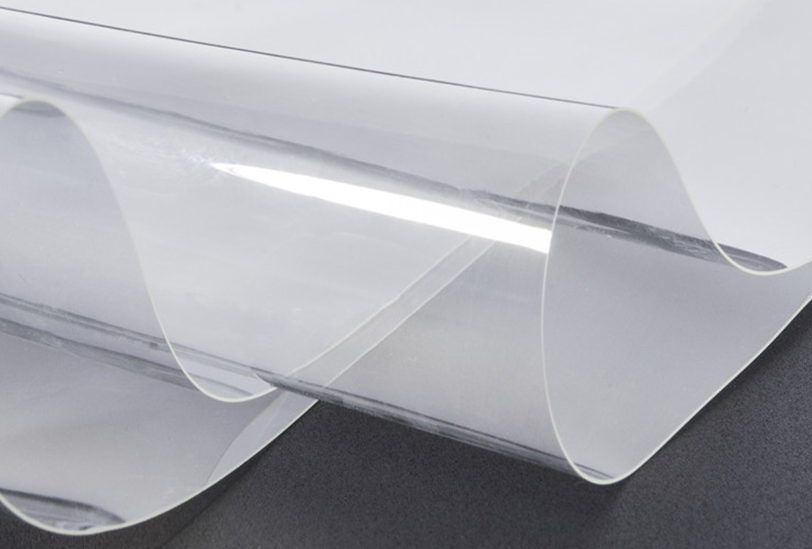
The best factories maintain in-house laboratory equipment that simulates mass production on a 1:1 scale. This means:
Sample width of 400mm – Representative of full-scale production, not a scaled-down approximation
Fast sampling lead time – Days, not weeks
Low sampling cost – Often free or deeply discounted against future orders
Stable sample quality – The sample you test is the product you'll receive
Real-world impact: One medical device startup we tracked needed 30 variations of TPU film for a wearable insulin patch. The factory that could produce 400mm-wide samples in three days allowed them to test adhesion, flex fatigue, and skin compatibility in parallel. They found their optimal formulation in nine days. Competitors using factories with 100mm sample widths took six weeks—and still faced scale-up surprises.
Actionable tip: Before signing a contract, ask for a sample test agreement. If they can't do 400mm widths or quote a lead time under five business days, keep looking.
3. Customization Beyond Thickness and Hardness
Every medical application has unique requirements. A wound dressing needs a film that breathes but doesn't adhere to the wound bed. A catheter needs a film that bends a million times without kinking.
The right factory supports customization of:
Thickness – From 0.01mm to 0.5mm, with tolerance control at ±0.005mm
Hardness – Shore A ratings from 60 to 95, allowing flexibility matching to the intended tissue contact
Functional properties – Additives for antimicrobial action, radiopacity for imaging, or UV stabilization
My perspective: The factories that claim "we can do everything" usually nail nothing. The best ones say, "Here's our current range, and here's our R&D timeline for your specific requirement." Look for that honesty.
Actionable tip: Send the factory a detailed spec sheet before visiting. If their technical team responds with intelligent questions about your application, that's a green flag. If they just say "yes, we can do that," treat it as a yellow flag.
4. Proven International Track Record
TPU medical film is a global business. Your factory should have shipped to multiple countries and passed each destintion's regulatory inspection.

Consider Shanghai Xin Gen Tech Co., Ltd. (Xin Gen Tech), established in 2009. Their headquarters, R&D, and factory span over 6,000 square meters in Shanghai, with sales branches in Shenzhen and Los Angeles since 2023. They've exhibited at major medical trade shows, including the 2025 Shanghai CMEF, showcasing innovative medical materials.
Their strength lies in balancing vertical integration with responsive sampling. Their 1:1 simulation line means what you test in the lab is exactly what you'll get in mass production. For medical brands that cannot afford batch-to-batch variation, that's non-negotiable.
Actionable tip: Request customer references in your specific application area—wound care, catheters, wearable devices. A factory that happily provides clinical or industrial references is confident in their product. One that demurs should be avoided.
The Bottom Line
The TPU medical film market is growing because the material genuinely solves problems—waterproofing, breathability, biocompatibility, and durability. But the factory you choose determines 80% of your product's success. Certifications must be current, samples must be production-scale, customization must be real, and the track record must be global.
If you're serious about medical product development, spend the extra week vetting your factory. Get the 400mm samples. Run the flex tests. Ask about their R&D pipeline. The material will perform—if you're working with a manufacturer who understands that in healthcare, precision isn't a luxury. It's a baseline.
Medical devices save lives. The right TPU film ensures they do their job without adding risk.