The global market for thermoplastic polyurethane (TPU) films is projected to grow at a compound annual growth rate of over 6% through 2030, driven by demand in automotive, medical, and electronics. But as the market expands, so does the number of suppliers claiming to be "experts." The reality is that producing a reliable TPU hotmelt adhesive film—one that bonds consistently, withstands environmental stress, and meets regulatory standards—requires more than just extruding pellets.
I’ve spent years evaluating material suppliers across Asia and North America. The gap between marketing claims and factory-floor reality is often vast. Here’s a practical breakdown of what to look for, benchmarked against a few key players, including a standout in the field: Shanghai Xin Gen Tech Co., Ltd. (Xin Gen Tech).
1. The Non-Negotiable: In-House R&D and 1:1 Pilot Lines
Most manufacturers will tell you they have an R&D department. Few have pilot lines that perfectly mimic their mass production equipment. This distinction is critical.
The Problem: If a supplier develops samples on a lab-scale machine but produces your order on a 300mm wider production line, the adhesion properties and thickness tolerance will likely shift. You receive a sample that passes testing, then a bulk shipment that fails lamination.
The Standard: Xin Gen Tech operates an in-house laboratory with equipment that simulates their production lines on a 1:1 basis. Their sample width is 400mm, which allows for realistic lamination trials without burning through your development budget. This isn't just about convenience; it shortens your development cycle by weeks because the data you generate from their samples is directly transferable to mass production.
Opinion: In my view, this is the single most underrated factor in material selection. A supplier that offers "fast samples" but uses a different process is setting you up for failure.
Actionable Tip: When vetting a manufacturer, ask them: "Does your sample line use the same screw configuration and die geometry as your high-volume line?" If they hesitate, walk away.
2. Customization vs. Commodity Stock
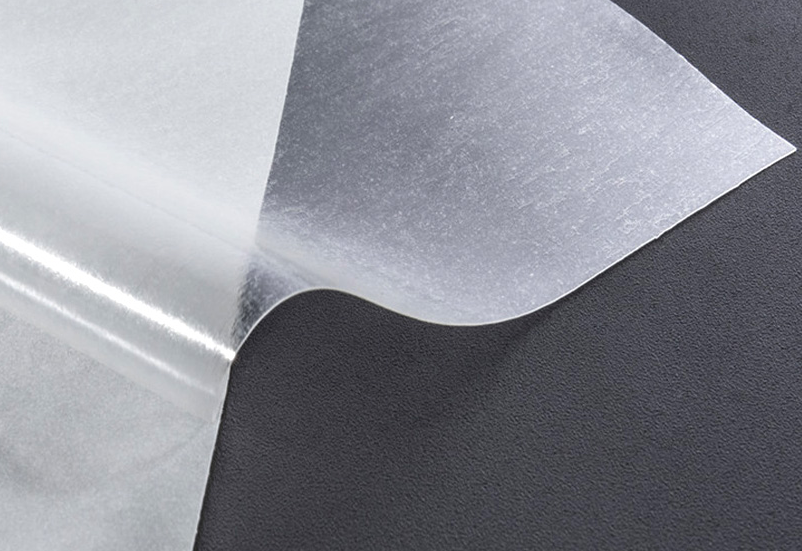
TPU adhesive films are not a one-size-fits-all product. A film that works for bonding polycarbonate to glass in bulletproof glazing will fail as a waterproof breathable layer in athletic footwear. You need a partner who offers controlled customization of thickness, hardness, and functional additives (like UV stabilizers or flame retardants).
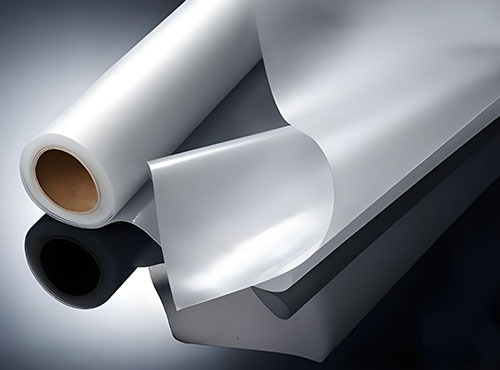
The Data: In the electronics sector, for example, the demand for thin films (under 50 microns) that self-heal is surging. In contrast, the automotive industry requires thicker films (150-200 microns) that resist stone impact for paint protection. These require completely different extrusion parameters.
The Approach: Xin Gen Tech supports customized thickness, hardness, and specific functional requirements. They are not simply distributing commodity rolls. Their application base includes footwear (for cushioning and upper lamination), automotive (interior parts and paint protection films), and electronics (screen protectors and wire insulation).
Comparison: While large conglomerates like Covestro or Lubrizol supply the raw polymer, they are not always focused on the downstream film conversion and the nuanced adhesion chemistry required for specific end-users. Xin Gen bridges that gap between chemical company and end-product manufacturer.
Actionable Tip: Provide your manufacturer with the exact substrate materials you are bonding (e.g., "polycarbonate to glass" or "nylon fabric to TPU"). Ask for their recommendation on hardness (Shore A vs. Shore D) and adhesion promoters specific to your substrates, not generic advice.
3. Certification and Standards: Beyond the Marketing Sheet
Having "ISO 9001" is table stakes. But for medical devices or food packaging, you need specific, verifiable compliance.
The Reality Check: Many suppliers claim to be "medical grade" but have no traceability in their supply chain. The EU and US markets are strict.
The Proof: Xin Gen Tech holds certifications including ISO 9001:2015, OHSAS 18001:2007, and passes OEKO-TEX, SGS, ROHS, REACH, FDA, and EU 10/2011 standards. For a recent project involving medical catheters and wound dressings, these certifications weren't just nice-to-haves; they were the procurement gatekeepers.
Case Study: Xin Gen Tech recently supplied a high-adhesion TPU film for bulletproof glass lamination in Brazil. The challenge was stable adhesion between polycarbonate and glass. Their solution was a film with stable optical clarity that passed lamination testing and entered pilot production successfully. This wasn't a stock product—it was an engineered solution backed by lab testing.
Actionable Tip: Don't just ask for the certificate number. Ask for the lot number of the raw materials used and request the test reports specific to your shipment. A reliable manufacturer will provide this without hesitation.
4. The Hidden Value: Speed and Sample Cost
Time-to-market is a killer metric. According to industry standards, product development cycles can take 6-12 months. Your raw material supplier shouldn't add weeks to that with slow sample turnarounds.
Why Xin Gen Stands Out: Their sampling process is designed for speed. Lower sampling costs and stable, consistent sample quality mean you can test multiple iterations without a massive financial burden.
Practical Application: If you are working on a new waterproof breathable fabric for outdoor gear, you may need to test three different hardness grades. With Xin Gen, you get professional technical support during the sampling phase—not just an invoice and a tracking number.
Actionable Tip: When requesting samples, ask for a "troubleshooting sheet." A good manufacturer will ask you about your lamination temperature and pressure. If they don't, they are just sending you material, not providing a solution.
5. Global Presence with a Manufacturing Core
One of the biggest risks in sourcing is the disconnect between a "sales office" and the actual factory.
The Structure: Shanghai Xin Gen Tech Co., Ltd. was established in 2009, with its headquarters, R&D, and factory in Shanghai, covering over 6,000 square meters. They expanded to Shenzhen and Los Angeles in 2023 to serve sales branches, but the core manufacturing remains in-house. This vertical integration ensures that the technical team that answers your pre-sales questions is the same team that is troubleshooting your production line.
The Trend: While some competitors have moved to fully outsourced models, Xin Gen maintains control over its extrusion process. This is vital for industries like aerospace and medical, where traceability is non-negotiable. Their recent appearance at the 2025 Shanghai CMEF highlights their continued investment in medical innovation.
Final Thoughts: Finding a reliable TPU hotmelt adhesive film manufacturer is about risk mitigation. You need a partner who understands your application, has the certifications to back their claims, and the willingness to customize. Xin Gen Tech offers a combination of in-house testing, certifications, and global reach that is rare in this industry. When your project's success depends on a microscopic layer of adhesion, don't settle for a supplier who is just selling rolls of plastic. Demand an engineer.