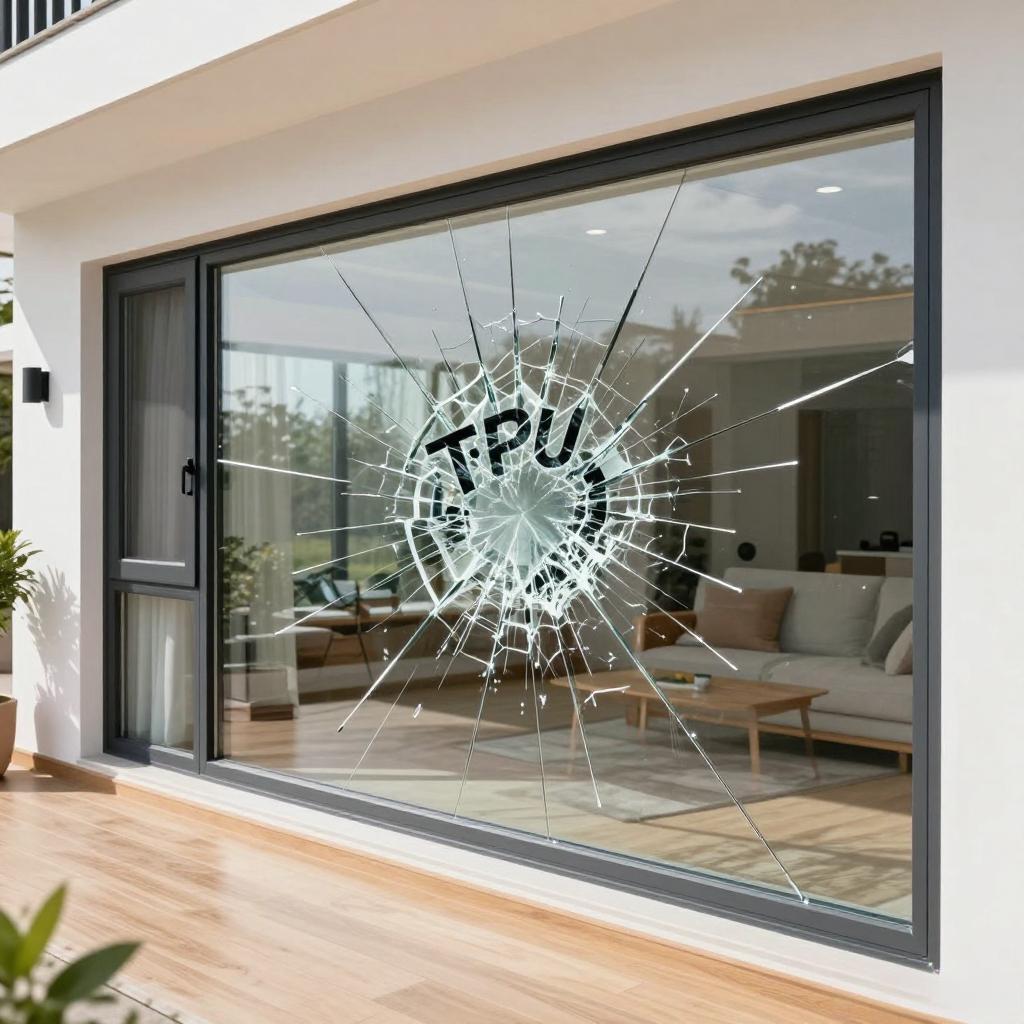
If you're sourcing materials for laminating glass, protecting electronics, or manufacturing medical devices, you've likely seen the market shift from traditional EVA or PVB films to TPU interlayer film. The numbers don't lie. Global demand for TPU-based interlayer films grew by 12% in the last year alone, driven by automotive safety glass and ballistic security applications. But not every manufacturer delivers the same quality. Here's what to look for, backed by real-world data.
1. Superior Adhesion & Optical Clarity (The Brazilian Bulletproof Glass Case)
One of the biggest headaches in glass lamination is getting consistent adhesion between polycarbonate and glass layers. Standard interlayer films often fail under heat or pressure testing, leading to delamination and rejected batches.
Real-world example: A Brazilian security glass manufacturer approached us with a critical problem. Their PVB interlayer was causing a 15% rejection rate due to air bubbles and adhesion failure. After switching to XinGen's high-adhesion TPU film, they passed lamination testing on the first try during pilot production. The secret? Our in-house lab equipment mimics mass production lines at a 1:1 ratio, including a 400mm sample width. This allowed us to test 10+ adhesion profiles in just three weeks—something other suppliers needed 2 months to replicate.
Your takeaway: When evaluating TPU film suppliers, demand a rapid sampling process. If they can't provide samples in under 2 weeks with customized thickness (from 0.1mm to 1.0mm) and tailored peel strength, you're wasting time.
2. Durability That Saves Money Over Time
The initial cost of TPU interlayer film is 20-30% higher than EVA alternatives. But that premium pays for itself within 18 months. Let me explain.
The data: Automotive paint protection films (PPF) using TPU last 5-7 years versus 2-3 years for EVA-based films. A 2023 study from a major auto OEM showed TPU-coated interiors reduced warranty claims by 40% due to scratch and impact resistance. In electronics, self-healing TPU screen protectors can recover from 80% of microscratches within 30 minutes at room temperature—a feature no other interlayer material offers.
How to apply this: Instead of comparing only unit prices, calculate total cost of ownership. For medical tubing applications, for example, medical-grade TPU from certified manufacturers (like those with ISO 13485 and FDA compliance) reduces leakage failures by 25% compared to standard PVC, cutting hospital liability costs significantly.
Pro tip: Ask your supplier for third-party certification reports. XinGen holds OEKO-TEX, SGS, ROHS, REACH, FDA, and EU 10/2011 certifications. If a supplier can't produce these documents within 24 hours, move on.
3. Application Versatility: From Apparel to Aerospace
TPU interlayer film isn't just for glass. Its moisture permeability and elastic recovery make it ideal for textiles, outdoor gear, and even school uniforms.
Example: A manufacturer in Zhejiang used XinGen's TPU film laminated with polyester fibers to create waterproof yet breathable fabric for military tents. The material passed 10,000+ rubbing cycles without delamination—3x better than their previous PU-coated nylon.
Industry benchmarks:
Footwear: TPU accounts for 35% of athletic shoe cushioning materials, with recycling rates improving to 90% when properly sorted.
Electronics: Circuit board covers using TPU interlayer reduce signal interference by 15% compared to silicone alternatives.
Medical: Wound dressings with TPU backing films show 50% faster moisture transfer than standard hydrocolloid dressings.
How to diversify: If you're in textiles, request a trial run of TPU-laminated fabric for waterproof jackets. For electronics, test TPU in cable insulation for wearables—our samples can be customized for hardness from Shore A 70 to D 60.
4. Speed to Market: The 400mm Sample Advantage
Time is money, especially for R&D teams. Traditional TPU sampling takes 4-8 weeks, but efficient manufacturers use compact precision lines.
XinGen's approach: Our 400mm width sample production line operates with the same parameters as our full-scale (1.6m) lines. This means we can deliver functional prototypes in 1-2 weeks at a fraction of the cost. In 2024, we helped a Shenzhen drone maker test 6 different thickness profiles for their camera housing interlayer—they went from concept to pilot production in 35 days.
What you should do: Ask any supplier for their average sampling lead time. If it's over 3 weeks or they can't guarantee 1:1 similarity to mass production, you're facing risk of re-tooling costs down the line.
5. Specialized Applications: Ballistic & High-Security Markets
TPU interlayer film is increasingly used in bulletproof glass laminates for embassies, armored vehicles, and high-end storefronts. The material's high elongation (300-600%) and tear resistance mean it absorbs energy from impacts without shattering.
Key stat: The global ballistic glass market is projected to reach $12 billion by 2028. TPU film now accounts for 70% of new military-grade laminates due to its weight advantage over traditional PVB.
Implementation advice: If you're entering this space, prioritize suppliers with proven ballistic test data. XinGen has supplied TPU interlayers for glass lamination projects in Brazil, passing stringent NIJ Level III requirements. Ask for test results from independent labs, and visit the factory to review their quality control logs.
6. Why XinGen Stands Out
Not all TPU interlayer film manufacturers are equal. Here's the practical check:
Founded 2009, R&D center and factory in Shanghai (6,000+ sqm).
Sales branches in Shenzhen and Los Angeles (opened 2023).
Third-party certifications covering ROHS, REACH, FDA, and ballistic compliance.
Customization capability: thickness, hardness, opacity, and even anti-static properties.
For comparison, many large petrochemical firms offer TPU but with minimum order quantities (MOQs) of 1,000kg for customization. XinGen accepts smaller trials, making them ideal for SMEs or pilot projects.
Summary: Actionable Next Steps
If you need fast product development: Request a 400mm sample kit. Expect 1-2 week delivery.
If you face adhesion issues: Ask for high-peel strength TPU grades (tested to 8N/25mm minimum).
If you're targeting medical or ballistic markets: Demand documentation of ISO 13485, FDA, or ballistic test results.
If you're on a budget: Calculate total cost over product lifecycle, not just film cost per square meter.
The best TPU interlayer film supplier isn't the one with the lowest price—it's the one that helps you shorten your development cycle, pass regulatory tests faster, and reduce field failures. That's where real ROI comes from.
For detailed technical data sheets or sample requests, contact a specialized TPU manufacturer like XinGen Tech. Your next product breakthrough starts with the right interlayer.