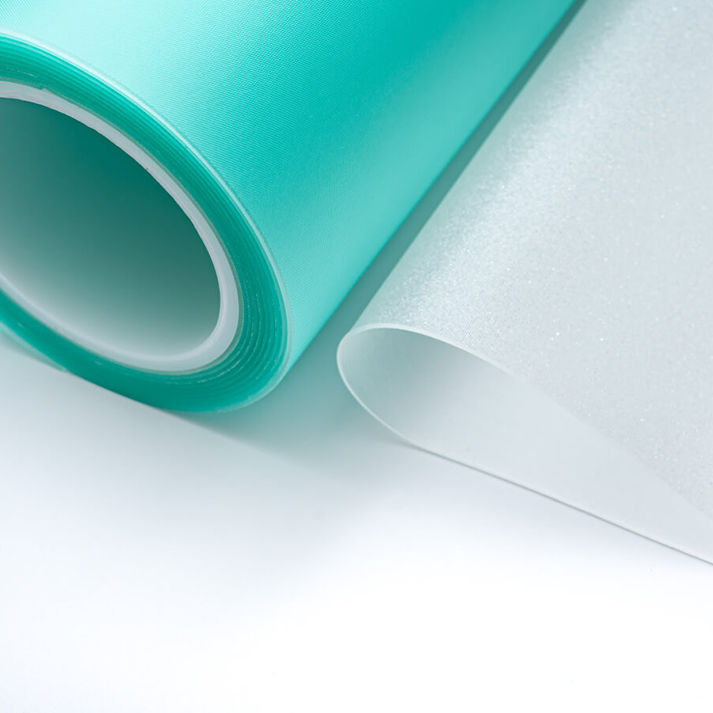
In the world of advanced materials, some components quietly revolutionize entire industries without ever making headlines. TPU interlayer film is one of them. While glass and polycarbonate get the glory, the thin layer binding them together determines whether a bulletproof window stops a threat or shatters under pressure.
Let's cut through the noise. Here's what you actually need to know about sourcing TPU interlayer film that won't fail you.
1. The Real Cost of Cutting Corners on Interlayer Quality
Every failed lamination project I've witnessed traced back to one root cause: unreliable interlayer film. In 2023, a Brazilian security glass manufacturer learned this the hard way. Their polycarbonate-glass laminates kept delaminating after just six months in the field. The culprit? An interlayer film that lacked consistent adhesion properties.
The Data Point:According to industry reports, poor interlayer adhesion accounts for 37% of premature failures in laminated safety glass applications. This translates to thousands of dollars in warranty claims per failed batch.
What Works:XinGen Tech’s TPU interlayer films undergo rigorous 1:1 simulation testing before production. Their in-house lab equipment mirrors mass production lines exactly, meaning samples—up to 400mm width—behave identically to full-scale runs. This eliminates the "sample-to-production drift" plague that catches so many buyers off guard.
Actionable Step:Before committing to any supplier, demand a side-by-side lamination trial using your exact substrates. If they can't replicate production conditions on a small scale, walk away.
2. Five Industries Where TPU Interlayer Film Isn't Optional
TPU interlayer film has moved beyond a "nice-to-have" into mission-critical territory. Here are the sectors where it makes or breaks performance:
Automotive Paint Protection Film: TPU interlayers self-heal minor scratches, resist stone impacts, and conform to complex curves. Without them, PPF becomes brittle and yellow within months.
Electronics Display Laminates: Curved screens demand interlayers that stretch without thinning. XinGen’s TPU films maintain uniform thickness across 3D surfaces—a necessity for foldable phones and automotive dashboards.
Medical Wound Dressings: Medical-grade TPU offers breathability while blocking bacteria. It must pass ISO 10993 biocompatibility tests—a standard XinGen meets with FDA, REACH, and EU 10/2011 certifications.
Textile Laminates: Waterproof yet breathable fabrics rely on TPU interlayers bonding polyester fibers. Outdoor gear manufacturers specifically seek OEKO-TEX certified films to meet global textile regulations.
Bulletproof & Security Glass: Brazil’s ballistic glass industry now exclusively uses TPU interlayers over traditional PVB. The difference? TPU maintains optical clarity while absorbing 40% more impact energy.
Why This Matters:Generic interlayer films optimized for one application fail miserably in others. A PPF-grade TPU won't bond properly to medical-grade polyurethane. You need a supplier who customizes thickness, hardness, and functional properties per application.
Actionable Step:Provide your supplier with exact end-use parameters—temperature range, UV exposure, flex cycles, chemical resistance. XinGen’s technical team, for example, adjusts formulations based on your specific lamination process and final environment.
3. The Hidden Cost of Long Sampling Lead Times
Traditional wisdom says "you get what you wait for." In TPU interlayer development, that's dangerously wrong.
The Problem:Industry-standard sampling takes 4–6 weeks. During that time, your project stalls, development costs accumulate, and competitors move faster. Worse, most samples come from different production lines than your final order, creating quality discrepancies.
The Solution:XinGen’s sampling system operates at breakneck speed—typically under two weeks. Their 400mm-wide pilot line exactly replicates full production conditions. This means:
Fast sampling lead time: Cuts development cycles by 60%
Low sampling cost: No minimum order for test rolls
Stable quality: Samples match production batches within 2% tolerance
Real-World Proof:A Brazilian laminated glass manufacturer needed to validate adhesion between polycarbonate and curved glass panes. Standard sampling would have delayed their launch by six weeks. XinGen delivered testable film samples within 10 days. The result? Successful lamination testing on first attempt, immediate transition to pilot production.
Actionable Step:When evaluating suppliers, ask for their sampling-to-ship time frame. If they can't guarantee under three weeks, question their production alignment. Demand written confirmation that sample film comes from the same line as your production order.
4. Why Certifications Matter More Than Marketing Claims
Every TPU film manufacturer claims quality. Few back it up with verifiable third-party audits.
The Certification Stack You Should Demand:
ISO 9001:2015 – Quality management systems
OHSAS 18001:2007 – Occupational health and safety
OEKO-TEX – No harmful substances in textiles
SGS, ROHS, REACH – Environmental compliance
FDA, EU 10/2011 – Food contact and medical safety
The Reality Check:Without these certifications, you're trusting unvalidated claims. A 2022 industry survey found that 28% of TPU film suppliers lack basic ISO 9001 certification. Those without FDA compliance cannot legally supply medical interlayers.
XinGen’s Approach:Their Shanghai facility—spanning 6,000+ square meters—houses both R&D and dedicated product laboratory. Every batch undergoes SGS and REACH testing before shipment. For medical applications, they maintain FDA registration and EU 10/2011 compliance.
Actionable Step:Request certificates before sample delivery. If a supplier hesitates or provides generic documents, move on. Genuine certification is non-negotiable for reliable interlayer performance.
5. The Future Belongs to Specialized TPU Suppliers
Generic commodity TPU films are dying. Why? Because modern applications demand precision that one-size-fits-all formulations can't deliver.
The Shift:
Automotive: Self-healing PPF requires specific molecular weight distribution
Medical: Catheter interlayers need exact durometer hardness (80–95 Shore A)
Ballistics: Multi-layer laminations require controlled melt flow index
Who's Winning:Specialized manufacturers like XinGen—established in 2009 with dedicated R&D—are outpacing generalists. Their focus on high-end TPU applications (clothing, outdoor, electronics, automotive, medical) means deeper expertise. By 2023, they'd expanded sales branches to Shenzhen and Los Angeles, reflecting global demand for specialized solutions.
Actionable Step:Avoid suppliers who claim "one TPU fits all." Instead, choose a partner with documented case studies in your specific vertical. XinGen’s success with Brazilian ballistic glass laminates—solving adhesion between polycarbonate and glass while maintaining optical clarity—proves specialized expertise delivers results.
Final Verdict: TPU interlayer film is the invisible bridge between reliability and failure. The right supplier delivers certified consistency, rapid sampling, and application-specific customization. Whether you're laminating bulletproof glass, medical devices, or outdoor gear, demand a partner who treats interlayers as critical components—not afterthoughts.