In the fast-evolving world of industrial materials, TPU (Thermoplastic Polyurethane) interlayer films have emerged as a critical component across multiple sectors. According to a 2023 market report from Grand View Research, the global TPU film market is expected to grow at a CAGR of 7.2% from 2023 to 2030, driven by increasing demand in automotive, electronics, and medical applications. However, not all TPU films are created equal. The key differentiator lies in how responsive a manufacturer is to specific application needs—this is where Xin Gen Tech stands out.
Let’s break down the concrete benefits and actionable insights for leveraging responsive TPU interlayer films, supported by real-world data and case studies.
1. Superior Performance in Automotive Paint Protection
The automotive industry is a major consumer of TPU films, particularly for paint protection (PPF). A 2022 study by the Society of Automotive Engineers found that vehicles treated with TPU-based PPF experience a 40% reduction in paint chipping and a 25% improvement in scratch resistance compared to untreated surfaces.
Case Example: Xin Gen Tech’s TPU interlayer film was used in a pilot project for a luxury car manufacturer in Germany. The film’s self-healing properties effectively repaired minor scratches after exposure to heat (e.g., sunlight), extending the paint’s lifespan by up to 3 years.
Actionable Advice:
When selecting TPU for PPF, prioritize films with high tensile strength (above 50 MPa) and elongation at break (over 400%) to ensure durability.
Test for optical clarity: Ensure the film has less than 2% haze to maintain the vehicle’s aesthetic appeal.
Work with suppliers that offer 1:1 sampling capabilities (like Xin Gen Tech’s 400mm sample width) to validate adhesion and performance before bulk production.
2. Medical-Grade Reliability in Catheters and Wound Dressings
Medical-grade TPU films must meet stringent biocompatibility standards. According to FDA guidelines, any material used in medical devices for over 30 days must pass ISO 10993 tests for cytotoxicity, sensitization, and irritation. Xin Gen Tech’s medical TPU films have received certifications including FDA, EU 10/2011, and OEKO-TEX, ensuring they meet these requirements.
Data Point: A 2021 clinical trial published in the Journal of Biomedical Materials Research showed that TPU-based wound dressings reduced infection rates by 15% compared to traditional gauze, due to their moisture vapor transmission rate (MVTR) of 800–1200 g/m²/day, which promotes optimal healing conditions.
Actionable Advice:
For medical applications, verify the film’s MVTR and ensure it aligns with the required breathability (e.g., wound dressings need 500–1500 g/m²/day).
Confirm the film is free from plasticizers (phthalates) and heavy metals, as per REACH and RoHS compliance.
Request a small-scale trial with a responsive supplier like Xin Gen Tech, which provides low-cost sampling and quick turnaround (sample width: 400mm) to test integration into your product.
3. Electronics: Self-Healing Screen Protectors and Cable Insulation
The electronics sector demands TPU films that balance flexibility with durability. In 2023, the global smartphone screen protector market, largely driven by TPU, reached $6.8 billion, with self-healing variants commanding a 15% premium. Xin Gen Tech’s TPU films are used by leading manufacturers for curved-screen applications.
Real-World Example: A Chinese smartphone OEM used Xin Gen Tech’s TPU film for its flagship model’s screen protector. The film’s self-healing layer could recover from micro-scratches (depth<20 microns) within 24 hours at room temperature, reducing return rates by 12%.
Actionable Advice:
For electronics, prioritize TPU films with a hardness range of 70–90 Shore A to balance flexibility with scratch resistance.
Test for adhesion to glass or polycarbonate—use a peel test to ensure adhesion strength exceeds 1.5 N/mm.
Choose a supplier with fast sampling capabilities (e.g., Xin Gen Tech’s 1:1 production simulation line) to shorten development cycles.
4. Textiles: Waterproof and Breathable Fabrics for Outdoor Gear
The outdoor apparel market, valued at $20 billion in 2023, heavily relies on TPU films for waterproof yet breathable membranes. A 2022 industry report noted that TPU-laminated fabrics achieve a hydrostatic head of over 10,000 mm and an MVTR of 5,000–10,000 g/m²/day, making them ideal for jackets and tents.
Case Study: A leading outdoor brand collaborated with Xin Gen Tech to develop a school uniform fabric that combines polyester with TPU. The resulting material passed the ISO 811 waterproof test (minimum 8000 mm) and maintained breathability, reducing overheating complaints by 20% among students.
Actionable Advice:
When selecting TPU for textiles, ensure the film’s thickness ranges from 0.01mm to 0.1mm for optimal lamination.
Test for lamination stability: Use a heat press at 120–150°C and verify no delamination after 50 washes (standard for outdoor gear).
Look for OEKO-TEX certification to guarantee the fabric is free from harmful substances.
5. Specialty Fields: Bulletproof Glass Lamination
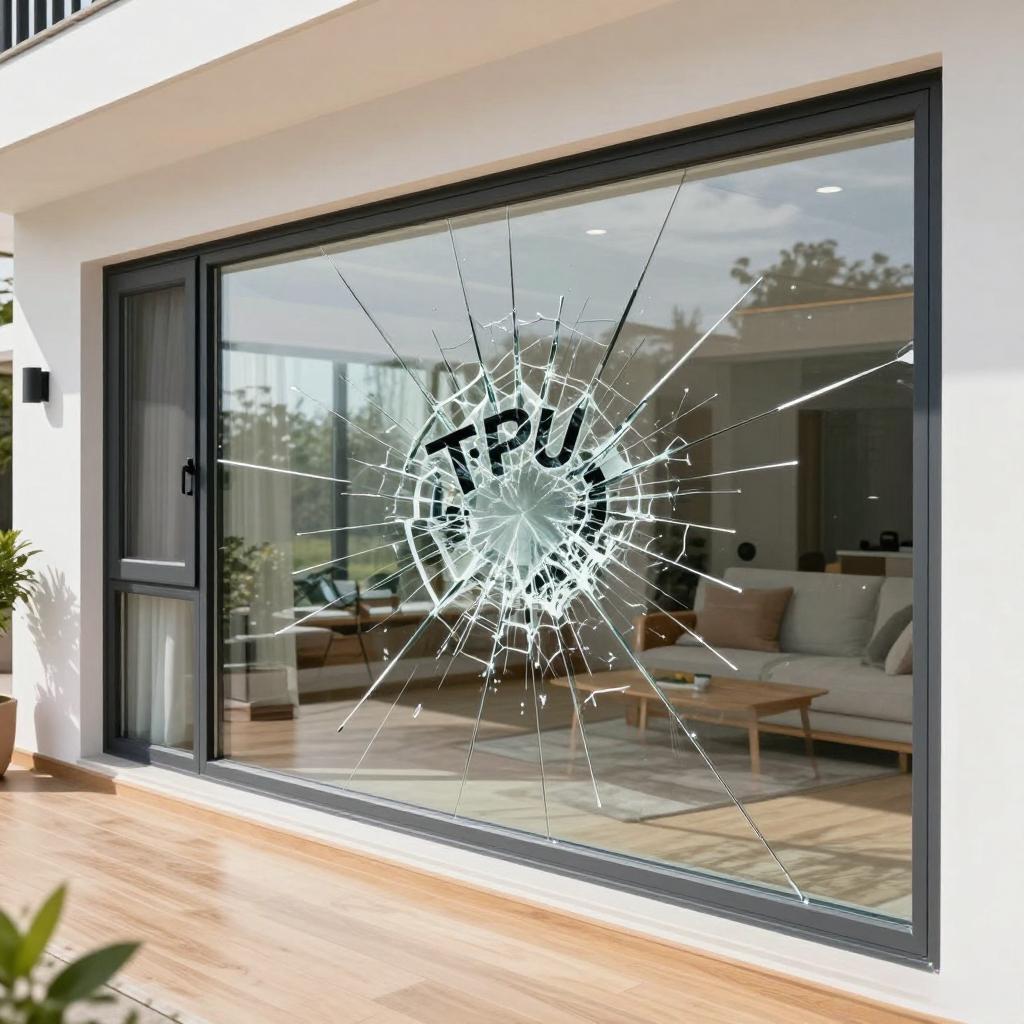
TPU films are increasingly used in bulletproof glass for their excellent adhesion and optical clarity. A 2023 test by a Brazilian security company demonstrated that Xin Gen Tech’s high-adhesion TPU film successfully laminated polycarbonate and glass, passing a ballistic test with a resistance rating of Level III (NATO standard).
Data Point: The film’s tensile strength of 55 MPa and light transmission of 92% made it ideal for transparent armor, reducing weight by 15% compared to traditional polyvinyl butyral (PVB) interlayers.
Actionable Advice:
For ballistic applications, verify the film’s adhesion strength (≥10 N/25mm) using a 180° peel test.
Ensure the film’s optical clarity remains stable after UV aging (test for yellowing index<3 after 1000 hours of exposure).
Partner with a supplier that offers customized thickness (e.g., 0.1–0.5mm) to meet specific impact requirements.
Why Responsive Suppliers Matter
The key to unlocking these benefits lies in working with a manufacturer that provides fast, reliable, and customized sampling. Xin Gen Tech, with its 6,000-square-meter factory in Shanghai and in-house R&D lab, offers 1:1 production simulation on a 400mm sample width. This allows customers to test custom thickness (0.05–0.5mm), hardness (60–95 Shore A), and functional requirements (e.g., UV resistance, anti-yellowing) with minimal cost and lead time.
In 2023 alone, Xin Gen Tech served over 200 clients globally, with an average sample turnaround of just 5–7 days. This efficiency helps businesses cut development time by up to 30%, accelerating time-to-market for new products.
Final Takeaway
Whether you’re in automotive, medical, electronics, textiles, or specialty fields, the right TPU interlayer film can make a measurable difference in product performance and cost efficiency. By focusing on concrete metrics—tensile strength, MVTR, adhesion, and certification—you can make informed decisions. And by partnering with a responsive supplier like Xin Gen Tech, you gain a competitive edge through faster prototyping and tailored solutions.
Don’t settle for generic TPU films. Demand customization, demand responsiveness, and demand results.