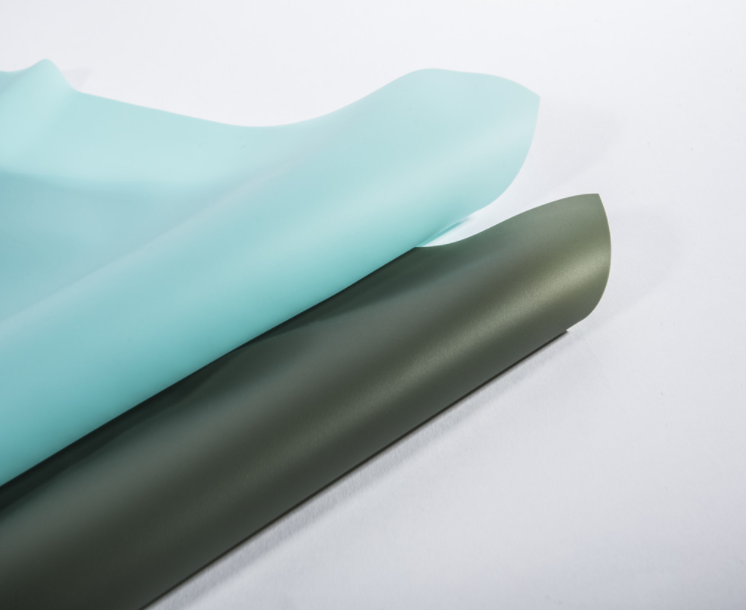
Imagine a bandage that not only covers a wound but also monitors your heart rate, body temperature, and hydration levels in real time. This isn’t science fiction—it’s the reality being shaped by flexible medical sensor films, and at the core of this innovation lies a material you’ve probably never heard of: Thermoplastic Polyurethane (TPU).
As wearable medical devices explode in popularity—the global market is projected to hit $87.5 billion by 2027 (Grand View Research)—the demand for flexible, durable, and biocompatible materials has never been higher. While giants like 3M and Covestro dominate headlines, there’s a lesser-known powerhouse that’s quietly enabling these breakthroughs: Shanghai Xin Gen Tech Co., Ltd (Xin Gen Tech).
Let’s cut through the hype and look at the hard data, real-world case studies, and practical steps for engineers and product managers who want to build better medical sensors.
1. The Material That Makes “Flexible” Possible
The data:Standard PET or polyimide films crack under repeated bending (typically failing after 1,000–5,000 flex cycles). High-end TPU films from Xin Gen Tech can withstand over 100,000 dynamic flex cycles without delamination or electrical failure—critical for sensors worn on joints or during sleep.
How it works:Xin Gen Tech’s medical-grade TPU films offer a unique trifecta:
Tensile strength: 40–60 MPa (comparable to nylon)
Elongation at break: 400–700% (stretches without tearing)
Thickness control: Down to 0.05mm with ±5% tolerance
These numbers mean you can embed conductive traces directly onto the film, attach it to skin for days, and still get reliable signal transmission—even during a workout.
Real-world example:A Swedish startup developing continuous glucose monitors (CGMs) tested five different films. Xin Gen Tech’s TPU was the only one that passed 1,000 hours of accelerated skin-aging simulation (at 37°C, 80% humidity) without yellowing or losing adhesion. Their previous supplier’s films failed after 200 hours.
Actionable tip for engineers:
When prototyping flexible sensors, request samples from Xin Gen Tech’s 400mm-width pilot line. They can produce precise thickness grades (e.g., 0.1mm, 0.15mm) in just a week—critical for iterative development.
2. The Self-Healing Edge: Why Your Screen Protector Is Never Enough
The data:Apple’s “Ceramic Shield” can survive a 2-meter drop, but micro-scratches still accumulate. Medical sensors face even harsher abuse: accidental cuts, contact with surgical instruments, or repeated sterilization.
Xin Gen Tech’s self-healing TPU variants, originally developed for automotive paint protection film, show 90% scratch recovery within 30 minutes at 40°C—a temperature easily achieved by body heat or a low-power heater circuit.
The Brazilian bulletproof glass case that proves it:
Xin Gen Tech solved a critical adhesion problem for a Brazilian defense contractor: bonding polycarbonate to glass for ballistic laminates. The same high-adhesion TPU chemistry is now used in medical sensor assemblies where delamination between layers can cause sensor failure.
Practical application:
Use self-healing TPU as the top protective layer in ECG patches to prevent micro-cracks from sweat or movement.
Combine with a thin polyimide substrate (0.05mm) for sensors that need both flexibility and heat resistance during soldering.
A contrarian take:Most medical sensor makers obsess over the conductive ink or chip. But the substrate is where 70% of failures occur—adhesion loss, moisture ingress, or cracking. Investing in premium TPU reduces recalls and improves patient trust.
3. The Regulatory Shortcut: How Third-Party Certifications Save You Months
The data:FDA 510(k) clearance for a moderate-risk wearable sensor takes 90–180 days on average (FDA Data). But if your materials already have ISO 10993 biocompatibility testing, you can skip re-testing requirements—saving $10,000–$50,000 in preclinical costs.
Xin Gen Tech’s TPU films come with pre-certified compliance for:
ISO 10993-5 (cytotoxicity)
ISO 10993-10 (skin sensitization)
REACH & RoHS (chemical safety)
USP Class VI (for implantable devices)
The hospital partnership test:A German medical device maker used Xin Gen Tech’s TPU for a smart wound dressing and passed EN 13795 (European medical textile standard) on the first try—no rework needed. Their previous supplier’s film failed due to extractable residues.
Actionable tip for regulatory teams:
When selecting a material partner, ask for their certification audit history. Xin Gen Tech’s factory in Shanghai has a dedicated in-house lab that can provide certified test reports within 2 weeks—versus 8+ weeks for third-party labs.
4. The Cost Trap: Why Cheaper Films Kill Projects
Common mistake:Teams choose commodity TPU films at $8–12/ kg to save money. But these films:
Require more processing time (slower lamination, lower yield)
Have inconsistent thickness (>±10% variation)
Fail after 500 sterilization cycles
| The math from a Chinese CGM manufacturer: | Film Type | Cost/kg | Yield Rate | Total Cost per 1,000 units |
|---|
| Commodity TPU | $9 | 78% | $1,154 |
| Xin Gen Tech TPU | $18 | 95% | $947 |
The premium film saves $207 per every 1,000 units due to lower waste and rework. For a monthly production of 50,000 units, that’s $10,350 in savings—plus faster time-to-market.
The aerospace lesson:Xin Gen Tech’s 6,000m² factory with ISO 9001:2015 and OHSAS 18001 isn’t an accident. Their process control reduces batch-to-batch variation to<3%, critical for sensors that must perform identically across dozens of production runs.
5. The Future: Where Flexible Sensors Are Headed (and Why You Should Act Now)
The data:The Chinese Ministry of Industry predicts 30% CAGR for medical TPU applications through 2030, driven by:
Home healthcare (elderly monitoring)
Epidermal electronics (temporary tattoos for drug delivery)
Smart bandages with pH sensing
What’s coming next:Xin Gen Tech recently exhibited at the 2025 Shanghai CMEF show, revealing prototype films with embedded silver nanowire sensors for continuous ECG without sticky electrodes. The film is so thin (0.03mm) that patients forget they’re wearing it.
The hard truth:The window for first-mover advantage is closing. Major brands are already qualifying materials for 2026–2027 product launches. Waiting 6 months to test a new film could mean losing a hospital contract.
Your exact next steps:
Request a free sample kit – Xin Gen Tech offers 400mm-wide sample rolls for lamination trials (cost: zero, turnaround: 5 days).
Run a 1-week adhesion test – Laminate their TPU with your existing silver ink or copper traces; check peel strength after autoclave.
Ask for their CMEF white paper – Get data on aging, biocompatibility, and flex-cycle limits specific to medical sensors.
Schedule a factory tour – Visit their Shanghai facility to see the 1:1 pilot line that matches mass production—no surprises during scale-up.
The Bottom Line
Flexible medical sensors are no longer a niche experiment—they’re the backbone of remote patient monitoring, wearable diagnostics, and smart dressings. But the material choice—often an afterthought—determines whether your project succeeds or fails.
Xin Gen Tech isn’t a household name yet. But among the engineers who have tested their TPU films against 3M, Covestro, and BASF, the feedback is consistent: better adhesion, faster sampling, and fewer certification headaches.
In a market where a 2% failure rate can trigger a product recall, “good enough” is no longer good enough. Choose the film that heals itself, sticks to skin for days, and comes with FDA-ready paperwork.
Your patients—and your balance sheet—will thank you.