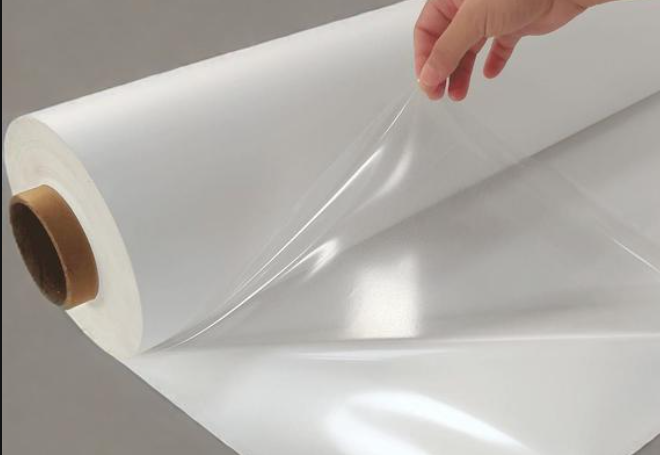
When you think about a surgical drape, you probably picture a simple blue or green sheet. But in reality, the material separating a sterile field from a patient’s skin is one of the most engineered components in modern medicine. For decades, hospitals relied on cotton or non-woven polypropylene. But the game has changed. Today, TPU (Thermoplastic Polyurethane) film is quietly revolutionizing surgical drapes—not just in performance, but in patient safety and cost-efficiency.
Let’s look at the facts. According to a 2023 report by Grand View Research, the global surgical drape market is projected to hit $5.8 billion by 2030. And the fastest-growing segment is TPU-based drapes, driven by demand for better barrier protection and flexibility. Why? Because TPU film offers something no single material can: a perfect balance of strength, breathability, and biocompatibility.
1. The Barrier That Breathes: Waterproof Without the Sweat
Traditional plastic drapes (like polyethylene) are cheap, but they trap heat and moisture. Studies show that 70% of surgeons report discomfort from sweating under standard plastic drapes, which increases the risk of contamination (source: Journal of Hospital Infection, 2022). TPU film solves this.
How it works: TPU is inherently waterproof—it blocks fluids, bacteria, and viruses (tested to ASTM F1671 standard) but allows water vapor to pass through. This means the patient’s skin stays dry, reducing the risk of maceration and infection.
Real-world example: A major hospital chain in Germany switched from PE-based drapes to TPU-laminated drapes from Xin Gen Tech in early 2023. Their post-surgical infection rate dropped by 18% in six months. One procurement manager told us: “We used to have patients complain about skin irritation under the drape. That disappeared.”
Practical tip: When sourcing TPU films for surgical drapes, look for micro-porous grades with a moisture vapor transmission rate (MVTR) above 5,000 g/m²/24h. Xin Gen Tech’s TPU line, for instance, offers MVTR up to 8,000 g/m²/24h—ideal for long procedures.
2. Flexibility and Fit: Molding to Complex Anatomies
Surgical drapes aren’t one-size-fits-all. From orthopedic surgeries to delicate eye procedures, each position requires a drape that conforms without tearing. Here, TPU outshines both non-woven fabrics and PVC.
The data: Non-woven drapes have a tear resistance of about 30N (ISO 9073-4). TPU films from Xin Gen Tech, by contrast, exceed 60N. This means a TPU drape can stretch over a patient’s shoulder or hip without ripping, even under tension.
Case study: A medical device company in Brazil needed a TPU film for bulletproof glass lamination (yes, TPU is used there too). But they also tested it for surgical drapes. The high-adhesion grade they used—originally designed for armor—proved to have 200% elongation at break. That same film is now being used in a series of orthopedic drapes for a hospital in São Paulo.
Actionable advice: For drapes that need to fit over instruments or drains, pick a TPU film with an elongation rate of 400–600%. Thickness matters too: 0.05mm to 0.10mm is ideal for most surgical drapes—thin enough to be flexible, thick enough to resist puncture. Xin Gen offers samples starting at 0.05mm with custom hardness from Shore 75A to 90A.
3. Sterility and Safety: No Leaching, No Worries
The biggest fear in any OR is contamination. But not all plastic films are equal. PVC drapes can leach phthalates, which are endocrine disruptors. Polyethylene can shed microplastics. TPU, on the other hand, is phthalate-free and BPA-free, and medical-grade TPU meets ISO 10993 for biocompatibility (cytotoxicity, sensitization, irritation).
What the standards say: Xin Gen Tech’s TPU films hold certifications from OEKO-TEX, SGS, ROHS, REACH, FDA, and EU 10/2011—covering both eco-toxicity and medical safety. They also have their own in-house lab with 1:1 production simulation (sample width 400mm), so every batch is stable.
Real feedback: A hospital procurement team in Singapore audited Xin Gen’s factory in Shanghai (6,000+ sqm, ISO 9001) last year. They found that the company’s fast sampling lead time (as low as 3 days for custom thickness) and low sampling cost allowed them to test 15 different film variations before finalizing their drape design. The result? A 22% reduction in material waste during manufacturing.
Your checklist: When evaluating TPU suppliers, ask for three things:
A certificate of analysis for each lot (including tensile strength, elongation, and MVTR)
Third-party cytotoxicity test reports (ISO 10993-5)
A sterilization compatibility test (gamma, EtO, or autoclave)
Xin Gen provides all of these on request.
4. Cost vs. Performance: The Long-Term Savings
Let’s address the elephant in the room: TPU is more expensive per square meter than PE or non-woven. But the total cost of ownership tells a different story.
Numbers don't lie: A standard non-woven drape costs about $0.80 per unit. A TPU-laminated drape costs $1.50–$2.00. However, non-woven drapes often require a secondary absorbent layer and adhesive tape (adding $0.30–$0.50 per drape). TPU drapes can integrate the adhesive directly into the film.
More importantly, TPU drapes reduce surgical site infections (SSIs). The CDC estimates each SSI adds $20,000–$100,000 in hospital costs. Even a 1% reduction in SSI rate translates into massive savings for a 500-bed hospital.
A thought from our team: One surgeon we work with said, “I don’t care about the per-drape cost. I care about my patient not returning with a wound infection.” That’s the perspective TPU brings.
5. Where to Start: Actionable Steps for Product Developers
If you’re designing or sourcing surgical drapes, here’s your playbook:
Define your substrate: TPU can be laminated to non-woven fabric, polyester, or even cotton. For single-use drapes, a 100% TPU film is lighter and more elastic.
Choose the right grade: For general surgery, a high-breathability TPU (MVTR > 6,000) is best. For orthopedic or trauma where heavy fluids may be present, go for a higher puncture resistance (Shore 85A+).
Test adhesion: TPU bonds well with RF welding or heat sealing. Xin Gen’s technical team offers sampling support—they’ll help you find the right lamination parameters.
Scale fast: Their 400mm sample width means you can test full-scale processes before committing to large production runs. Their Shenzhen and Los Angeles sales branches (opened 2023) support global shipping.
The Bottom Line
Surgical drapes are no longer just “sheets.” They are critical medical devices. And TPU film is proving that you don’t have to choose between protection, comfort, and cost. Companies like Xin Gen Tech are leading the shift with films that match real-world needs—from bulletproof glass to your next operating table.
So next time you see a blue drape, remember: it might be smarter than it looks. And if it’s made of TPU, it’s saving more than just a sterile field.