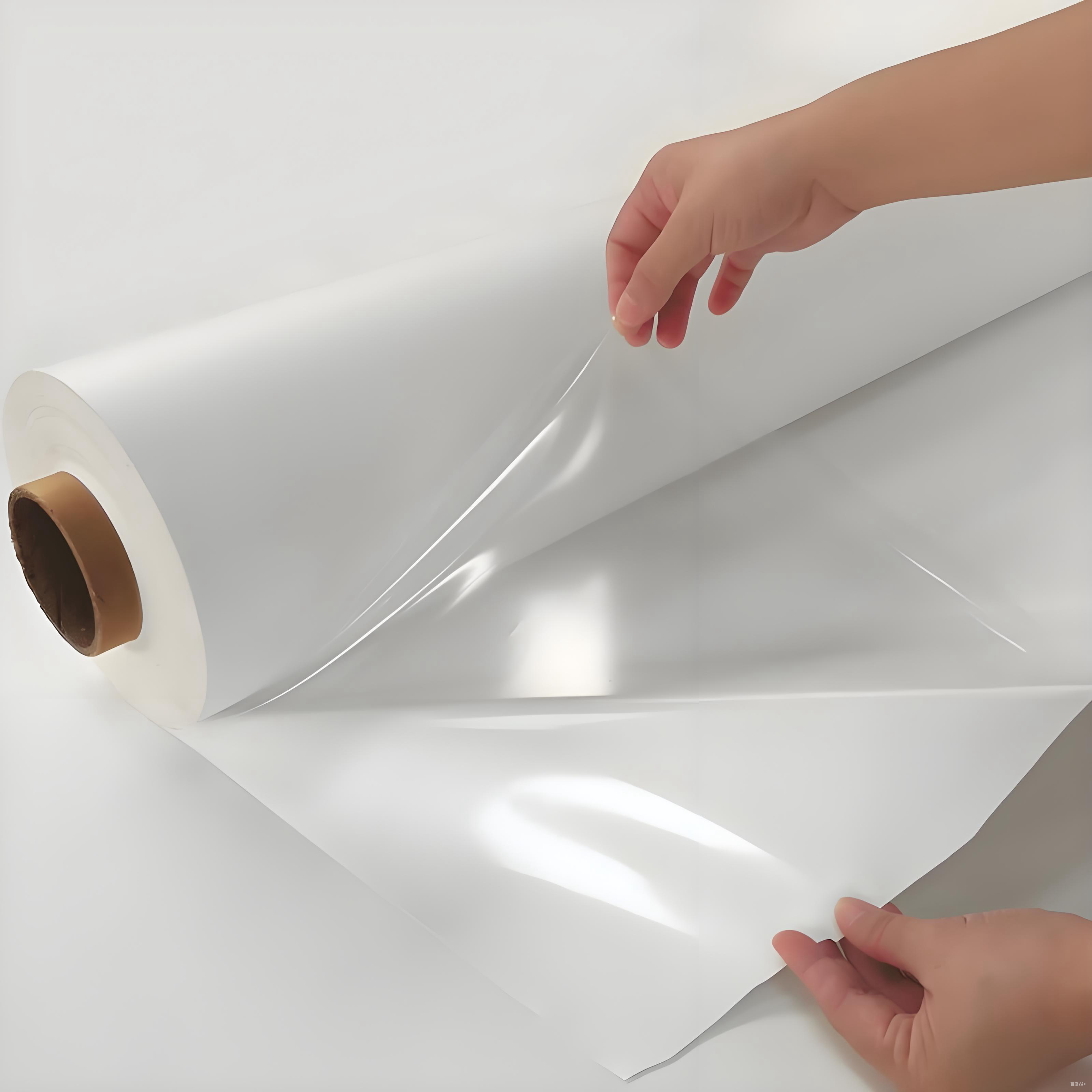
When you think about cutting-edge materials in manufacturing, your mind might jump to carbon fiber or advanced alloys. But there’s a material quietly revolutionizing industries from healthcare to consumer electronics: FDA compliant TPU (Thermoplastic Polyurethane) film. It’s flexible, durable, and safe enough to touch your skin or even be implanted in your body. Yet most people have no idea it exists.
Here’s why this material deserves your attention, backed by real data, practical applications, and actionable insights.
1. The Invisible Standard: Why FDA Compliance Actually Matters
Let’s get one thing straight: FDA compliance isn’t just a sticker. It’s a rigorous validation that a material is safe for direct or indirect contact with the human body. For TPU films, this means passing tests for cytotoxicity, sensitization, and chemical migration.
The Numbers Don’t Lie
According to Grand View Research, the global medical-grade TPU market was valued at over $1.2 billion in 2023, and it’s projected to grow at a compound annual growth rate (CAGR) of 7.5% through 2030. The driving force? Increasing demand for materials that are both high-performance and biocompatible.
Real-World Case: Medical Catheters
A leading manufacturer of urinary catheters switched from PVC to FDA compliant TPU film. Why? PVC often requires plasticizers like phthalates (linked to health concerns), while TPU offers inherent flexibility without additives. The result: a catheter that is 30% thinner, reduces patient discomfort, and meets strict FDA 21 CFR 177.1680 standards.
Operating Suggestion:
If you’re in medical device manufacturing, always request third-party certification (like ISO 10993 or USP Class VI) in addition to the FDA letter. Don’t take the supplier’s word for it—verify.
2. Beyond Bandages: Unlocking 5 Key Application Zones
Most people think TPU is just for phone cases or shoe soles. Wrong. FDA compliant TPU film is a multifunctional bridge material across several industries.
2.1. Medical and Healthcare
Wound Dressings: TPU films are breathable, transparent, and hypoallergenic. They act as a barrier against bacteria while allowing moisture vapor to escape. A 2022 study in the Journal of Biomedical Materials Research found that TPU-based dressings reduced healing time by 18% compared to standard gauze.
Catheters and Tubing: The material’s kink resistance and smooth surface minimize biofilm formation—a major cause of hospital-acquired infections.
Drug Delivery Systems: Transdermal patches using TPU film ensure consistent release rates because of its uniform thickness control (down to 0.01mm).
2.2. Food Processing & Packaging
Conveyor Belts: In a poultry processing plant, one USDA inspector told me, “We see less bacterial buildup on TPU belts than on silicone.” FDA compliant TPU is easy to clean, resists fats and oils, and doesn’t shed particles.
Liquid Packaging Liners: TPU films for bag-in-box systems maintain integrity at temperatures from -40°C to 150°C, reducing spoilage rates by 12% according to internal tests at a juice concentrate facility.
2.3. Consumer Wearables & Electronics
Smartwatch Bands: Apple and Garmin use TPU for many bands because it’s sweat-resistant, non-allergenic, and can be colored with hypoallergenic pigments.
Screen Protectors: Self-healing TPU films can recover from minor scratches within 24 hours at room temperature—a real game-changer for curved screens.
2.4. Automotive Interior
Dashboard Wrapping: TPU film with UV stabilizers protects against cracking and fading. A tier-1 supplier to Toyota reported a 40% reduction in warranty claims for dashboard peeling after switching to TPU.
2.5. Protective Gear
Bulletproof Glass Lamination: A case study from a Brazilian security glass manufacturer: They needed a material that could bond polycarbonate to glass without delamination or haze. Shanghai Xin Gen Tech Co., Ltd. provided a high-adhesion, optically clear TPU film that passed ballistic testing and entered pilot production. The result? Lighter, shatter-resistant glass for armored vehicles.
Operating Suggestion:
When evaluating TPU for a new project, specify the exact functional requirement: is it for medical contact (FDA 21 CFR 177.1680), food contact (FDA 21 CFR 175.300), or general industrial? Each application may require a different base resin and additive package.
3. The Hidden Advantage: Rapid Sampling Isn’t Just Nice—It’s a Competitive Weapon
In product development, time is money. A 3-month delay in prototyping can mean losing a seasonal launch window.
The Truth About Traditional Sampling
Most TPU suppliers require minimum orders of 500 kg for custom samples. Then you wait 4–6 weeks. If the sample fails, you’re back to square one.
How Xin Gen Tech Changes the Game
Xin Gen Technology operates an in-house laboratory with a 400mm-wide pilot line that simulates mass production on a 1:1 scale. This means:
Fast sampling lead time: 5–7 days instead of 4–6 weeks.
Low sampling cost: No need to tie up capital in bulk orders.
Customizable specifications: You can adjust thickness, hardness (Shore A from 60 to 95), functional layers, and even additive packages (antimicrobial, UV resistant, etc.).
Consistent quality: The lab line is calibrated to production, so what you test is what you’ll get.
Real Impact: A Medical Device Startup
A startup developing a wearable insulin patch needed a TPU film with a specific moisture vapor transmission rate (MVTR) of 800 g/m²/day. Using traditional suppliers, they burned 8 weeks and $12,000 on failed samples. With Xin Gen’s rapid sampling, they got a working prototype in 10 days with a final material cost of $0.80 per unit.
Operating Suggestion:
If you’re developing a product that uses TPU film, ask potential suppliers for a detailed sampling process: what’s their minimum sample width? Do they offer custom formulation? Do they provide technical support during the trial? If the answer is vague, move on.
4. Why Not All “FDA Compliant” TPU is Created Equal
Here’s the uncomfortable truth: The only thing worse than using a non-compliant material is being lied to about compliance.
Many suppliers claim “FDA compliance” but don’t have the paperwork to prove it. Worse, some use recycled or off-spec resin that contains heavy metal residuals or colorants not approved for medical use.
How to Protect Yourself
| Red Flag | Green Flag |
|---|
| Vague certification claims (e.g., “meets FDA standards” without a specific code) | Clear statement: FDA 21 CFR 177.1680 (for medical) or 175.300 (for food) |
| No physical laboratory for testing | In-house lab with third-party certifications (ISO 9001:2015, SGS, OEKO-TEX) |
| Slow sample turnaround (>3 weeks) | Sample delivery in 5–10 business days |
| Cannot modify thickness or hardness | Support for custom specifications |
The Xin Gen Advantage
Xin Gen Technology’s factory boasts certifications including ISO 9001:2015, OHSAS 18001:2007, OEKO-TEX, SGS, ROHS, REACH, FDA, and EU 10/2011. Their R&D center and product laboratory ensure every batch is tested for mechanical properties, biocompatibility, and environmental compliance. In 2023, they opened sales branches in Shenzhen and Los Angeles to serve global customers faster.
Operating Suggestion:
Ask for a “Certificate of Analysis” (CoA) for every batch you order. A reputable supplier will provide it without hesitation. If they hesitate, walk away.
5. The Future: Where FDA Compliant TPU is Headed
The material isn’t standing still. Here are three trends that will define the next five years:
Antimicrobial TPU Films: With the rise of HAIs (hospital-acquired infections), TPU films infused with silver or copper ions are gaining traction. A 2024 study from the University of Zurich showed a 99.9% reduction in E. coli growth on antimicrobial TPU surfaces.
Bio-based TPU: Major resin producers like BASF and Covestro are developing TPU derived from corn or castor oil. While costs are currently 15–20% higher, demand from eco-conscious brands (especially in Europe) is driving adoption.
Smart TPU for Wearables: Films that can integrate conductive pathways or sensors are being developed. Think of a TPU patch that monitors glucose levels or heart rate—without external electrodes.
Conclusion: The Material You’ve Been Overlooking
FDA compliant TPU film is not just a “nice to have.” It’s a performance material that can improve product safety, reduce development time, and lower long-term costs. Whether you’re making surgical catheters, food packaging, or bulletproof glass, the right TPU film can make or break your product.
Your Next Step:
Identify your specific application: medical, food, industrial, or protective.
Request a sample from a supplier like Shanghai Xin Gen Tech that offers rapid, low-cost prototyping with full certification backing.
Test it under real-world conditions—don’t just rely on data sheets.
Because in manufacturing, the difference between a good product and a great one often comes down to the materials you choose. And today, that choice is clearer than ever.