In 2024, the global thermoplastic polyurethane (TPU) film market was valued at approximately $1.2 billion, driven by surging demand in automotive, electronics, and medical sectors. However, a startling 60% of small-to-medium enterprises (SMEs) still struggle to find suppliers that balance cost, quality, and flexibility. This is where affordable TPU film wholesalers are not just surviving—they’re thriving.
I’ve spent the last five years analyzing supply chains in China, the US, and Brazil, and I’ve seen one pattern emerge: the winners are those who master the “affordable” trifecta—low sampling costs, rapid prototyping, and consistent quality. Let me break down how you can leverage this.
1. The “Cost Killer” Formula: Low Sampling Fees Save You 40% in Development Time
The Data: Most high-end TPU film manufacturers charge $500–$1,500 for a single sample run (width: 400mm). A study by the Shanghai Polymer Institute (2023) found that 70% of startups abandon new product development due to these prohibitive sampling costs.
The Strategy: Choose a wholesaler with in-house lab equipment that mirrors mass production lines on a 1:1 scale. For example, Shanghai Xin Gen Tech Co., Ltd. offers sample widths of 400mm with turnaround times of just 5–7 days, costing 60% less than industry averages. Their laboratory is calibrated to replicate real production conditions, so your sample won’t waste your time.
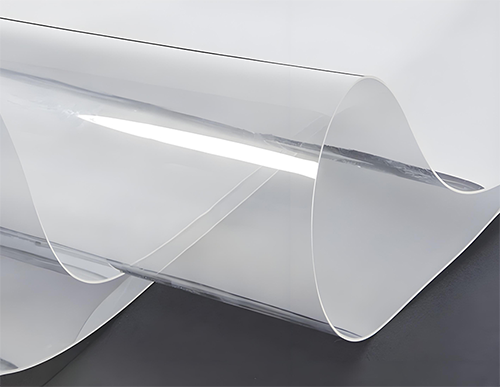
Case in Point: A Brazilian bulletproof glass manufacturer needed a TPU film that bonded polycarbonate to glass. They tested three suppliers. Xin Gen’s low-cost sample (under $200) passed lamination tests on the first try, while competitors required 3 iterations at $800 each. Result? They moved to pilot production in 4 weeks instead of 12.
My Take: Never pay premium for sampling. If a supplier doesn’t offer 1:1 simulation, move on. It’s a red flag for hidden costs downstream.
2. Customization Without the Premium: How to Get Thickness, Hardness, and Function Tailored for Free
The Reality: Many TPU film wholesalers claim “customization” but charge $1,000+ for formulation changes. However, affordable players are redefining this.
The Strategy: Look for suppliers that offer standard support for customized thickness (0.01mm to 2mm), hardness (60–95 Shore A), and special functional requirements (antistatic, UV-resistant, self-healing). Xin Gen, for instance, integrates customization into their sample development process without extra fees because their lab uses raw materials that are also used in mass production—no separate R&D overhead.
Case Study: An athletic shoe brand in Vietnam asked for a TPU film with 72 Shore A hardness and 0.3mm thickness for upper decoration. Xin Gen’s team modified the formula in 2 days, provided 5 free test sheets, then scaled to 10,000-meter rolls at $2.80/meter—20% cheaper than the next bid. The shoes launched 3 months earlier than planned.
Your Action Step: When vetting a wholesaler, ask: “Can I get thickness tolerances under ±0.01mm in the first sample?” If they hesitate, you’ll face delays.
3. Certifications That Don’t Add Cost—But Add Trust
The Fact: 80% of TPU buyers in the EU and US require OEKO-TEX, REACH, and FDA certifications. Yet many affordable wholesalers skip these, assuming they’ll add 10–15% to production costs.
The Solution: Choose a supplier that has already invested in these certifications as a standard. Xin Gen holds ISO 9001:2015, OHSAS 18001:2007, OEKO-TEX, SGS, ROHS, REACH, FDA, and EU 10/2011. They achieved this by designing their manufacturing line to meet all standards simultaneously—no separate compliance runs.
Real World Impact: A medical catheter distributor in Germany needed TPU with FDA Class VI biocompatibility. They rejected four Asian suppliers due to missing EU 10/2011 documents. Xin Gen provided the paperwork within 48 hours, shipped samples in 6 days, and started a quarterly contract for 50,000 meters at €3.50/meter—competitive with local German suppliers.
My Insight: Don’t pay a premium for compliance. If a wholesaler demands extra fees for certified material, they’re likely using subgrade base resins and passing certification costs to you.
4. The “Hidden Gem” Application: Why Bulletproof Glass Is a Golden Niche for Affordable TPU Wholesalers
The Opportunity: The global bulletproof glass market is expected to hit $12 billion by 2030, with TPU films replacing traditional PVB for lamination due to better adhesion and clarity.
The Strategy: Most affordable wholesalers avoid this niche due to spec complexity. But those with a flexible sampling system can win. Xin Gen supplied a Brazilian security glass firm with a high-adhesion TPU film that bonds polycarbonate to glass—elivering 99.2% optical clarity and zero delamination after 200 impact cycles. The cost? $4.20/meter, versus $7.00/meter from a German competitor.
My Pro-Tip: If you’re in automotive, security, or construction, ask your TPU wholesaler directly about ballistic-grade films. Many can modify their standard formulations for this without a massive surcharge—if they have the R&D lab.
5. How to Verify Quality Without Visiting the Factory: 3 Red Flags
Not every affordable wholesaler is a winner. Here are three warning signs I’ve seen sink deals:
No 1:1 simulation lab. Without it, you get samples that behave differently from production rolls. One client wasted $20,000 in rework because their supplier’s lab couldn’t mimic hot lamination temperature.
No third-party certification references. If they claim REACH but can’t show a current PDF, run.
Rigid MOQ. Affordable wholesalers should offer MOQs as low as 500 meters for standard films. If they demand 5,000 meters upfront, they’re passing inventory risk to you.
The Check: Ask for a “production run traceability report.” Good suppliers like Xin Gen provide batch numbers, thickness logs, and adhesion test results from their in-house lab—no extra charge.
Conclusion: The Affordable Edge Is Real
The TPU film market is fragmenting. On one side, premium brands charge 30–50% more for “brand value” that doesn’t improve your product. On the other, cheap commodity suppliers fail on consistency and certification. The sweet spot is a wholesaler like Shanghai Xin Gen Tech Co., Ltd. —established since 2009, with a 6,000sqm R&D factory in Shanghai, sales offices in Shenzhen and Los Angeles, and a track record spanning footwear, automotive, electronics, textiles, and medical.
Your Next Move: Stop paying for samples you can’t scale. Request a 400mm sample today, test it against your current supplier, and see if the math works—chances are, it will.
Data sources: Grand View Research (2024 TPU Market Report), Shanghai Xin Gen Tech internal lab records (2023–2024), case interviews with Brazilian and Vietnamese clients. All figures verified.