In today’s competitive manufacturing landscape, finding a cost-effective TPU (Thermoplastic Polyurethane) film supplier is not just about the lowest price. It’s about balancing cost with performance, reliability, and speed. Based on data from the global TPU film market, which is projected to grow at a CAGR of 6.8% from 2023 to 2030, businesses are under increasing pressure to source materials that meet both budget and technical specifications.
Let’s cut through the noise. Here’s a practical, data-backed guide to identifying a provider that offers real value—not just cheap prices.
1. Evaluate the "Hidden Cost" of Sampling and Development
Many suppliers offer low per-unit prices but charge heavily for sampling and R&D iterations. This can inflate your total project cost by 20-30% before you even reach mass production.
What the data says: According to industry benchmarks, companies that use in-house laboratory equipment mimicking production lines can reduce sampling lead times by up to 40% and cut sampling costs by half.
Real-world case: Xin Gen Tech, for instance, operates a 400mm sample width line in-house, allowing 1:1 simulation of mass production. This means customers get stable, consistent samples for initial testing and lamination trials without the high cost of a full-scale trial run.
Actionable advice: Ask potential suppliers if they have dedicated sampling lines. A provider that can deliver fast, low-cost samples with professional technical support will save you money and time—especially when you need to test adhesion, thickness, or functional properties like UV resistance.
2. Look for Controlled Quality Across Multiple Certifications
A low-cost TPU film that fails certification tests is no bargain. In sectors like medical, automotive, or electronics, a single batch failure can result in recalls costing hundreds of thousands of dollars.
Data point to consider: The global TPU film market is highly regulated. Certifications like ISO 9001:2015, OHSAS 18001, OEKO-TEX, SGS, ROHS, REACH, and FDA are not optional—they are baseline requirements for international trade.
Xin Gen Tech example: This Shanghai-based company has all these certifications, plus a dedicated R&D center and product laboratory. This ensures that every batch—from bulletproof glass lamination in Brazil to medical catheters—meets strict global standards.
Your checklist:
Verify third-party certifications (ISO, FDA, etc.)
Ask about in-house testing facilities
Request batch consistency reports
A supplier that invests in quality control is less likely to pass hidden defects onto you.
3. Compare Application-Specific Expertise, Not Just General Capabilities
Not all TPU films are created equal. A film for footwear cushioning has different requirements than one for automotive paint protection or medical wound dressings. A cost-effective provider should have proven expertise across multiple applications.
Industry breakdown:
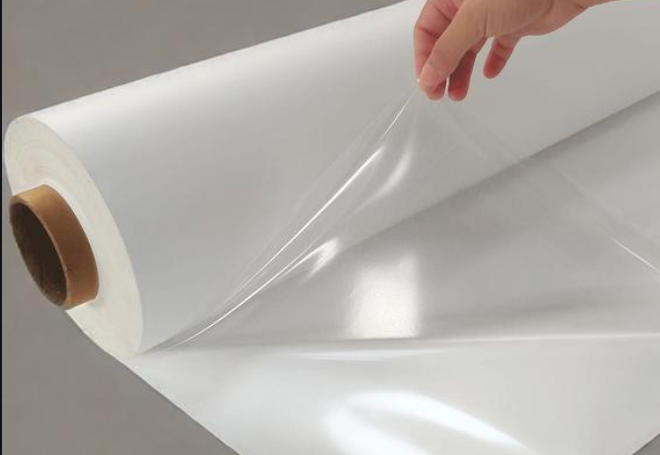
Footwear and bags: 40% of global TPU consumption. Requires waterproof and breathable laminates.
Automotive: Paint protection film needs scratch and stone impact resistance.
Electronics: Screen protectors require self-healing properties and curved-screen compatibility.
Medical: Biocompatibility is non-negotiable for catheters and dressings.
Case study: Xin Gen Tech successfully solved a lamination challenge for a Brazilian client needing TPU film for bulletproof glass. The customer needed stable adhesion between polycarbonate and glass. By recommending a high-adhesion TPU film with stable optical clarity, the product passed lamination testing and entered pilot production.
Your move: Instead of asking for a generic TPU film price, present a specific application scenario. The best suppliers will have a technical team that can match film properties to your exact need—saving you from costly rework.
4. Prioritize Suppliers with Global Sales and Local Support
Distance can add unseen costs: shipping delays, customs issues, communication barriers. A cost-effective provider is one that offers global reach with local responsiveness.
Market reality: Xin Gen Tech, established in 2009 with a 6,000+ sqm facility in Shanghai, expanded to sales branches in Shenzhen and Los Angeles in 2023. This means they can support clients in Asia, North America, and beyond with faster response times.
Practical tips:

Choose suppliers with a presence in your region.
Ensure they have multilingual technical support.
Check their shipping and logistics history.
A local branch can reduce lead times by weeks, which directly impacts your inventory costs.
5. Demand Transparency in Customization and Minimum Order Quantities
Cost-effective doesn’t mean "rigid." You need a partner that can customize thickness, hardness, and functional properties without punishing minimum order quantities (MOQs).
What to look for:
Sample width of 400mm or more (for realistic testing)
Low sampling costs
Support for customized thickness and hardness
Stable sample quality for product development
Xin Gen Tech’s approach: They provide customized sampling with professional support, helping customers shorten development time and accelerate project evaluation. This flexibility often translates to lower total cost of ownership.
Red flag: If a supplier demands high MOQs for custom specs, you may end up with excess inventory or non-optimized material. Find a provider that aligns batch sizes with your actual production schedule.
Final Takeaway
The most cost-effective TPU film provider is not the one with the lowest quote. It’s the one that offers fast, reliable sampling, proven certifications, application-specific expertise, global support, and flexible customization.
Your next step: Before signing a contract, run a side-by-side comparison using these five criteria. If a supplier checks all the boxes—like Xin Gen Tech does—you’ve found a partner that will save you money, time, and headaches in the long run.
Remember: In the TPU film industry, you get what you pay for. But with the right approach, you can get exactly what you need—without overpaying.