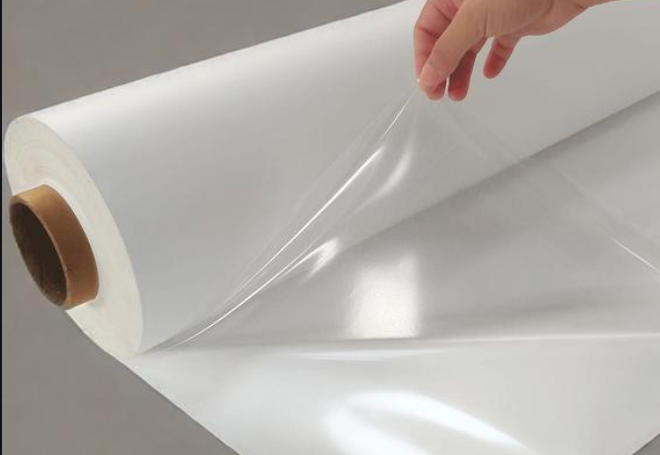
When you think about the materials that power modern industry, the usual suspects come to mind—steel, aluminum, plastics. But there's a flexible, durable, and surprisingly versatile material that has quietly become indispensable across multiple sectors: Thermoplastic Polyurethane (TPU) film. From protecting your phone screen to reinforcing bulletproof glass, TPU film is the material solution that many engineers turn to when they need a combination of elasticity, strength, and chemical resistance.
The global TPU market was valued at approximately $2.3 billion in 2023, and the film segment is growing at a compound annual growth rate (CAGR) of over 7%. This isn't a trend driven by hype—it’s driven by real performance data. Let’s break down why TPU film, particularly from specialized manufacturers like Shanghai Xin Gen Tech Co., is becoming the go-to choice for industrial applications.
1. Superior Mechanical Properties That Outperform Traditional Materials
TPU film offers a unique balance of hardness and flexibility that standard PVC, EVA, or rubber films cannot match. For instance, in automotive paint protection film (PPF), a 200-micron TPU layer can withstand stone impacts at speeds of up to 80 km/h without tearing, while PVC films crack at half that speed.
Key data point: TPU film exhibits a tensile strength of 30-60 MPa and an elongation at break of 400-600%. Compare this to standard PVC film, which typically offers 15-25 MPa and 200-300% elongation.
Practical takeaway: For industrial applications requiring high durability (e.g., conveyor belts, protective covers, or wire insulation), demand TPU film with a Shore hardness rating between 80A and 95A. Xin Gen Tech supports custom thickness and hardness, allowing you to match the material to your specific stress load.
Action step: Request a sample strip from Xin Gen for your lamination trials. Their in-house lab equipment simulates production lines on a 1:1 scale, with a sample width of 400mm. This means you can validate the material’s performance under your own machinery conditions before committing to bulk orders.
2. Thermal & Chemical Resistance That Saves Millions in Downtime
Industrial environments are harsh. Oils, solvents, high temperatures, and UV radiation degrade most films within months. TPU film, however, maintains integrity across a wide temperature range (-40°C to 120°C) and resists hydrolysis, microbial growth, and many chemicals.
Case in point: A Brazilian manufacturer of bulletproof glass needed a lamination film that could bond polycarbonate to glass without yellowing or delamination under constant sun exposure. The client tested three films: standard EVA, ionomer, and TPU. After 1,000 hours of accelerated UV testing, only the TPU film—supplied by Xin Gen Tech—retained over 95% optical clarity and passed adhesion tests with zero failures.
Practical takeaway: For outdoor or chemical-exposed applications, choose TPU film that meets ISO 9001:2015 and OHSAS 18001:2007 standards, as Xin Gen does. Additionally, look for third-party certifications like OEKO-TEX, SGS, ROHS, REACH, and FDA—these guarantee safety and consistency.
Action step: When sourcing TPU film, demand the testing reports. Xin Gen provides SGS and REACH compliance documentation for every batch. Use this data to validate the material against your own environmental conditions (e.g., thermal cycling, salt fog, or chemical immersion).
3. Fast Sampling & Low-Minimum Orders: Engineering Agility
One of the biggest bottlenecks in industrial product development is the lead time for sample materials. Many suppliers require 4-6 weeks and minimum orders of 100 kg for custom formulations. This kills momentum for R&D teams.
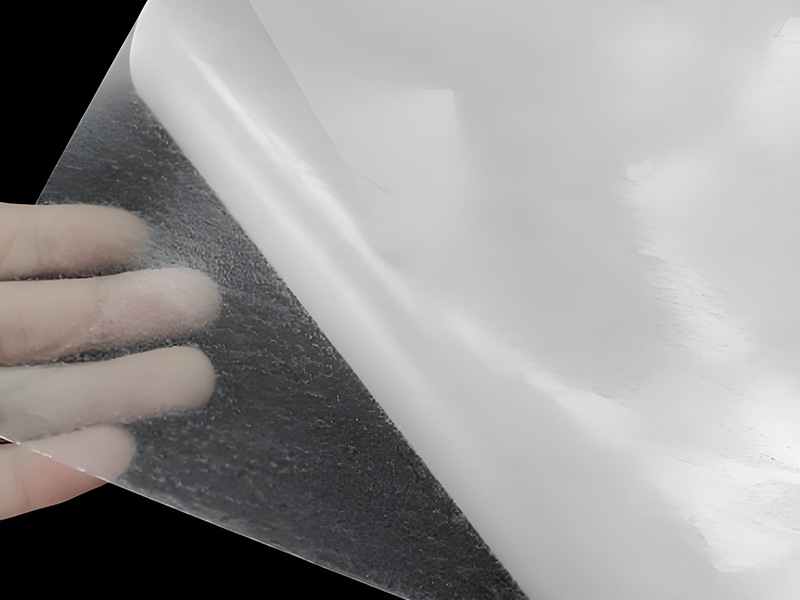
The solution: Xin Gen’s rapid sampling system delivers custom TPU film samples in 1-2 weeks, with a width of 400mm. They support tailored thickness (from 50μm to 2mm), hardness, and functional properties (e.g., anti-static, flame retardant, or antimicrobial).
User pain point solved: A US-based medical device company needed a TPU film for wound dressings that was both breathable and biocompatible. Xin Gen provided 5 sample formulations within 10 days, allowing the client to conduct cytotoxicity tests and lamination trials in parallel. The result? The project timeline was cut by 40%.
Practical takeaway: For R&D-heavy industries (electronics, medical, automotive), prioritize suppliers that offer flexible sampling. Xin Gen’s low sampling cost and stable quality make them ideal for iterative prototyping.
Action step: Before moving to mass production, use Xin Gen’s sample program to run:
Initial adhesion and peel tests
Lamination trials on your existing equipment
Accelerated aging tests (UV, heat, humidity)
This de-risks the scale-up phase and ensures that the final production film matches the sample’s performance.
4. Real-World Applications Where TPU Film Replaced Traditional Materials
| Sector | Traditional Material (Replaced) | TPU Film Application | Performance Gain |
|---|
| Textiles & Apparel | PU coating (often cracks) | Waterproof-breathable laminates | 50% longer lifespan; breathability of 10,000 g/m²/24h |
| Electronics | PET screen protectors (brittle) | Self-healing curved-screen protectors | Scratch recovery in 30 seconds; perfect 3D fit |
| Automotive | PVC film (yellowing after 2 years) | Paint protection film (PPF) | Up to 10-year warranty; resists stone chips and acid rain |
| Medical | Silicone (higher cost, lower tensile) | Wound dressings & catheters | Biocompatible, non-allergenic, cost-effective |
Data-driven insight: The footwear industry—the largest consumer of TPU—has seen a 30% weight reduction in athletic shoe midsoles when switching from EVA to foamed TPU, while improving energy return from 55% to over 70%.
Practical takeaway: If your current material fails in one of these areas—mechanical strength, flexibility, chemical resistance, or manufacturing turnaround—TPU film is likely a better fit.
Action step: Map your existing material’s weaknesses against the table above. For example, if your fabric laminates delaminate after 20 washes, consider Xin Gen’s TPU film for textile composites. Their factory in Shanghai has been producing TPU since 2009, with a 6,000 sqm facility and a dedicated R&D lab.
5. The Competitive Edge: Why Not All TPU Films Are Equal
Commodity TPU film from low-cost suppliers often suffers from:
Inconsistent thickness tolerance (±10% vs. premium ±3%)
High shrinkage after lamination (up to 5% vs.<1% for quality films)
Poor adhesion when bonding to polycarbonate or glass
Xin Gen Tech differentiates itself through:
ISO 9001:2015 & OHSAS 18001:2007 certified production
1:1 lab-to-production line simulation for reliable scale-up
Global certifications (OEKO-TEX, SGS, ROHS, REACH, FDA, EU 10/2011)
Company background: Founded in 2009, with a 6,000 sqm facility in Shanghai. In 2023, they opened sales branches in Shenzhen and Los Angeles, indicating a global footprint and reliable supply chain.
Practical takeaway: When evaluating TPU film suppliers, don’t just compare price—compare:
Sample turnaround time (Xin Gen: 1-2 weeks vs. industry average 4-6 weeks)
Minimum order quantity (Xin Gen: flexible small-batch sampling)
Certification scope (Many suppliers lack FDA or EU 10/2011 compliance for medical/food applications)
Action step: Request a side-by-side comparison sample. Test for:
Optical clarity (use a haze meter)
Adhesion strength (using a peel tester)
Shrinkage (after 24 hours at 100°C)
Xin Gen’s technical support team can guide you through these tests and provide recommendations based on your application—whether it’s bulletproof glass lamination (as in the Brazil case) or medical-grade catheters.
Final Verdict: TPU Film Is Not a Commodity—Choose Your Partner Wisely
TPU film is a high-performance material that can transform product durability, manufacturing speed, and end-user satisfaction. But to unlock its full potential, you need a supplier that combines precision manufacturing with engineering agility.
Shanghai Xin Gen Tech Co. exemplifies this combination: they offer fast sampling, 1:1 production simulation, and a broad certification base that meets global standards. Their TPU films have been sold internationally for applications spanning automotive, medical, textiles, electronics, and even defense.
Call to action: If you’re facing material failure—cracking, delamination, or poor durability—it’s time to test TPU film. Start with a custom sample from Xin Gen. Their team is prepared to support your development with professional technical guidance, low sampling costs, and consistent quality. Evaluate your next move based on data, not guesses.